
The Murder of Mahatma Gandhi — A Judicial Eye on a Nation’s Darkest Day
The Murder of Mahatma Gandhi is a compelling and meticulously argued book by G. D. Khosla, a distinguished Indian judge and legal thinker. The book revisits the assassination of Mahatma Gandhi on 30 January 1948 in New Delhi, examining the crime through the lens of law, evidence, and historical responsibility.
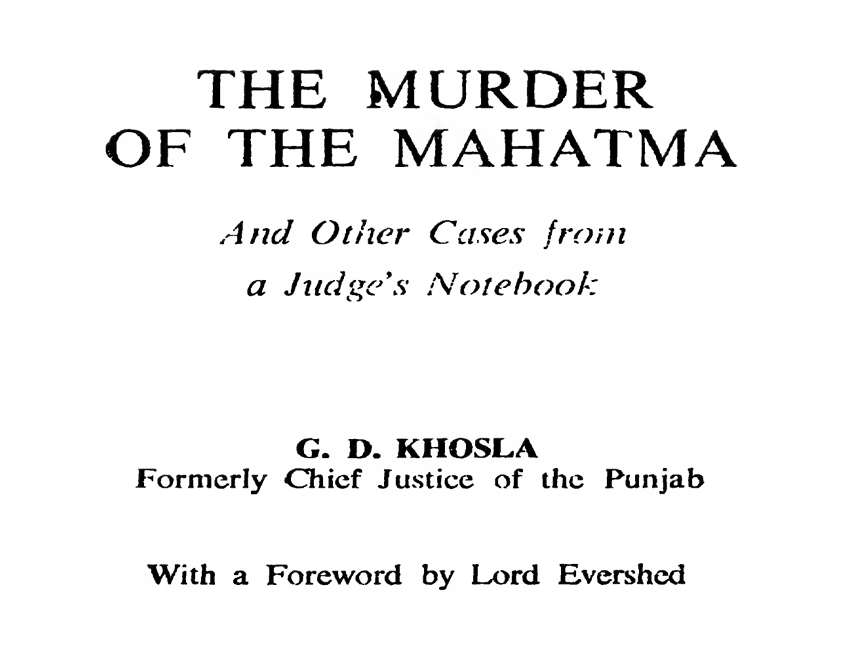
Rather than treating the tragedy as a single, isolated act, Khosla places it within the wider political and ideological tensions of post-Independence India. Drawing from court proceedings, testimonies, and documented records of the conspiracy, the book offers readers a grounded and analytical account of how the assassination unfolded and why it was able to happen.
What Makes This Book Stand Out
- A judge’s perspective on the case
Khosla approaches the assassination not just as a historian, but as a legal mind—carefully weighing evidence, contradictions, and responsibility. - Insight into the conspiracy and the trial
The book examines the roles of the conspirators, including Nathuram Godse, and reflects on how the investigation and trial shaped public understanding of the crime. - Context of a nation in turmoil
Set against the violence and political anxieties following Partition, the narrative helps readers understand the charged atmosphere in which Gandhi was killed. - A sober reflection on accountability and memory
Khosla raises important questions about institutional failures, ideological extremism, and how societies remember political violence.
Why You Should Read It
This book is not just about the murder of a leader — it is about the moral and political consequences of intolerance in a newly independent nation. For readers interested in modern Indian history, political violence, or landmark criminal cases, The Murder of Mahatma Gandhi offers a serious, thought-provoking account grounded in legal reasoning and historical evidence.
Rather than treating the tragedy as a single, isolated act, Khosla places it within the wider political and ideological tensions of post-Independence India. Drawing from court proceedings, testimonies, and documented records of the conspiracy, the book offers readers a grounded and analytical account of how the assassination unfolded and why it was able to happen.
What Makes This Book Stand Out
- A judge’s perspective on the case
Khosla approaches the assassination not just as a historian, but as a legal mind—carefully weighing evidence, contradictions, and responsibility. - Insight into the conspiracy and the trial
The book examines the roles of the conspirators, including Nathuram Godse, and reflects on how the investigation and trial shaped public understanding of the crime. - Context of a nation in turmoil
Set against the violence and political anxieties following Partition, the narrative helps readers understand the charged atmosphere in which Gandhi was killed. - A sober reflection on accountability and memory
Khosla raises important questions about institutional failures, ideological extremism, and how societies remember political violence.
Why You Should Read It
This book is not just about the murder of a leader — it is about the moral and political consequences of intolerance in a newly independent nation. For readers interested in modern Indian history, political violence, or landmark criminal cases, The Murder of Mahatma Gandhi offers a serious, thought-provoking account grounded in legal reasoning and historical evidence.
Whether you are a student, researcher, or general reader, this work remains a valuable reference for understanding one of the most traumatic moments in India’s modern history — and the lessons it continues to carry.



Comments