
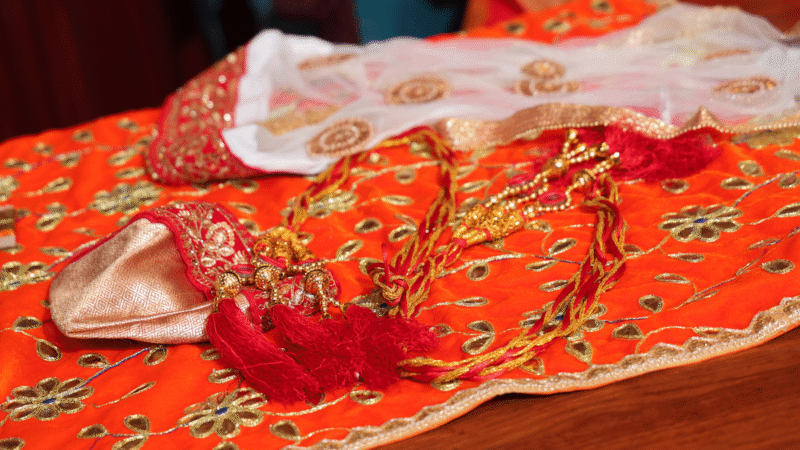
Threads of Resilience
Threads of Resilience: The Global Revival of the Pheran and Taranga For the global Kashmiri Pandit diaspora, clothing is no longer just about fashion—it has become a canvas of memory, identity, and quiet resistance against assimilation. Decades after the forced exile of 1990, a powerful cultural renaissance is taking over our social media feeds and wedding halls. The younger generation of Pandits is fiercely reclaiming two of our most iconic traditional vestments: the Pheran and the Taranga. What was once standard daily wear in the cold winters of Varmul, Anantnag, and Srinagar has evolved into a global statement of ethno-religious pride. Decoding the Silhouette: More Than Just Fabric To understand the revival, one must understand the deep-rooted history stitched into these garments: A Legacy Packaged in a Suitcase Following the mass displacement of 1990, families fled with little more than the clothes on their backs. In the scorching heat of transit camps in Jammu and Delhi, the heavy woollen Pheran was tucked away, replaced by standard sarees and western wear to blend into new environments. For years, the complex art of tying the Taranga risked becoming a dying skill, kept alive only in the fading memories of our elders. Today, the perspective has shifted. The diaspora youth look at these garments not as outdated relics, but as portable pieces of a lost homeland. Preserving them has become an act of keeping a fractured culture explicitly alive. From Wedding Rituals to Instagram Reels The revival is being heavily driven by the digital age. Modern Pandit brides are rejecting standard bridal veils, demanding the traditional Taranga for their weddings. Millennial and Gen-Z creators are flooding Instagram and TikTok with step-by-step tutorials documenting the complex tying process, ensuring the skill is digitally archived for generations to come. Simultaneously, the Pheran is undergoing a contemporary makeover. Modern designers are shortening the hemline, tapering the sleeves, and adding sleek, intricate Tilla (gold and silver thread) embroidery. It is no longer uncommon to see young Pandits pairing a stylized Pheran with jeans or boots at global corporate offices, university campuses, and international cultural festivals. A Global Identity This movement reaches its peak every year on December 21 (International Pheran Day). Pandits from the US, UK, Australia, and India flood social media with photographs using hashtags like #PheranDay and #KashmiriPanditCulture. Paired with the iconic Dejhoor (traditional gold ear pendants), the complete ensemble serves as a visual declaration: We may be scattered, but our roots remain unbroken. The Pheran and Taranga revival proves that while geography can change, heritage cannot be easily erased. Every time a young Pandit slips on a Pheran or a bride crowns herself with a Taranga, they are weaving the threads of our past directly into our future. Help Us Build the KPOnline Archive! Do you have old family photographs of your grandmothers wearing the traditional Taranga in Kashmir? Or a modern Pheran design you’d love to showcase? Share your stories, photos, and thoughts with the community in the comments below! Let us know: