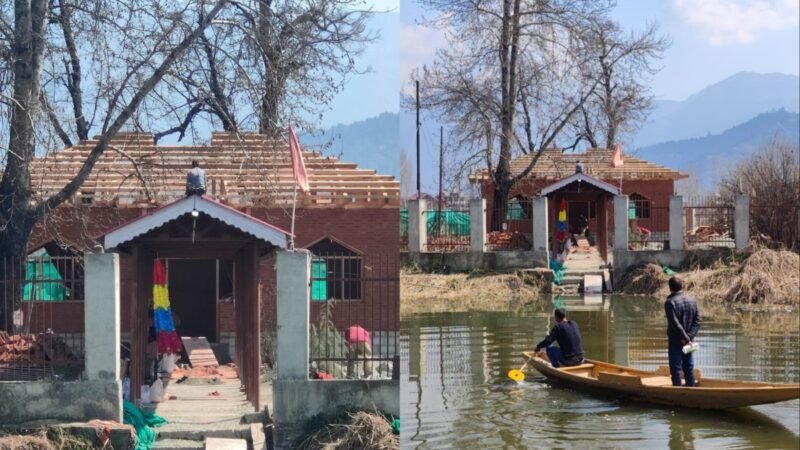
Nand Lal Ji of Kashmir – The Saintly Presence of Nand Bub Introduction Among the pantheon of saints and spiritual guides of Kashmir, Nand Lal Ji, popularly revered as Nand Bub, holds a distinct and beloved place. Born in the heart of the Kashmir Valley during a time of socio-religious transformation, Nand Lal Ji emerged as a beacon of divine wisdom, simplicity, and spiritual purity. His teachings, life, and legacy continue to inspire generations of Kashmiris—especially within the Kashmiri Pandit community. Birth and Early Life Nand Lal Ji was born in the 19th century (exact date uncertain) in Bijbehara, a town in South Kashmir, into a devout Kashmiri Pandit family. His early life was marked by extraordinary signs of devotion and spiritual curiosity. From a young age, he showed a deep disinterest in material pursuits and was drawn instead to meditation, chanting, and the study of sacred texts. Despite coming from a Brahmin family, Nand Lal Ji’s behavior was rooted in universal compassion and humility. He renounced worldly attachments early in life and embraced the path of a mystic, often retreating into deep contemplation and silence. Spiritual Journey Nand Bub’s spiritual life was one of bhakti (devotion) and vairagya (renunciation). He had no formal guru in the traditional sense but is believed to have attained enlightenment through inner tapasya (spiritual austerity) and divine grace. He was known to have spent long hours in meditation under the shade of Chinar trees and along the banks of the Jhelum River. His utterances and teachings were simple yet profound, often composed in the local Kashmiri language, and resonated deeply with the ordinary villagers. His style of teaching was neither preachy nor institutional—it was lived. His presence was the sermon. Life and Teachings Though not a prolific writer, Nand Lal Ji’s legacy lives on through oral tradition—in stories, hymns, and folk songs passed from one generation to the next. His sayings reflected a deep understanding of Shaivism, Advaita Vedanta, and the Bhakti movement. Some of his core teachings include: He advocated non-dualism (advaita) in a deeply personal and devotional way, much like other Kashmiri mystics such as Lalleshwari (Lal Ded) and Rupa Bhawani. Miracles and Reverence Many locals believe that Nand Bub performed miracles, though he never claimed them. These include healing the sick, manifesting food for the hungry, and calming disputes with a mere glance. His mere presence brought solace to people across religious lines—Muslims and Hindus alike came to him for blessings. His cottage or “kutir” became a center of spiritual magnetism. Devotees would flock there for guidance, healing, or simply to sit in silence near him. It was said that even in silence, his energy was transformative. Final Days and Legacy Nand Lal Ji left his body in early 20th century, though the exact year is uncertain. His samadhi (final resting place) is venerated by devotees, especially during his urs or annual remembrance day, which is celebrated with bhajans, havan, and community meals. His name is still invoked lovingly as “Nand Bub”, a term of endearment and spiritual kinship. In Kashmiri homes, especially those preserving Shaiva and Bhakti traditions, stories of Nand Bub are still narrated to children as moral and spiritual guidance. Nand Bub in the Post-Exodus Era After the 1990 exodus of Kashmiri Pandits from the Valley, the memory of saints like Nand Bub became even more vital. He represents the spiritual resilience and cultural roots of a displaced community. Even outside Kashmir—in Jammu, Delhi, or diaspora communities around the world—Nand Bub is remembered with deep reverence. Temples and shrines in his name have been built or revived in these areas, and his teachings are shared through satsangs and Kashmiri cultural programs. Conclusion Nand Lal Ji or Nand Bub was more than a mystic—he was a living embodiment of divine love, simplicity, and Kashmiri spirituality. In an age of turmoil and transition, his life reminds us of the enduring power of inner truth and compassion. He stands as a spiritual pillar of the Kashmiri Pandit identity—silent, strong, and luminous. Suggested Reading & Resources