
Culture Good Read

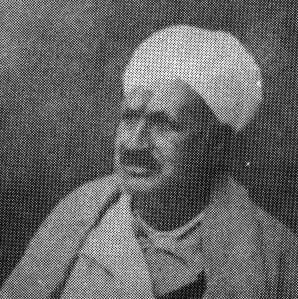
Pandit Govind Kaul

Pandit Govind Kaul Born in 1846 in Srinagar as the eldest son of Pandit Balbhadra Kaul, a universally respected scholar of his times (1819-96), Govind Kaul (G.K) had scholarship running in the family. His grandfather, Pandit Taba Kaul, too was a reputed scholar, having family ties with the famous Pandit Birbal Dhar who persuaded Ranjit Singh to free Kashmir from the tyranny of Afghan rule. G.K. and Birbal Dhar’s grandson Ramjoo Dhar, maintained the ties as friends. G.K. not only studied Persian and Sanskrit in keeping with the family tradition, he also acquired a good knowledge of English as well as western ways of life. To keep the record of history straight, it must be stated that G.K. and Ramjoo Dhar learnt English much before Pandit Anand Kaul and Pandit Shiv Ram Bhan. G.K. came to know a good deal about world affairs also through Ramjoo Dhar who held an important administrative position . Soon G.K. acquired fame for his erudition, particularly as a scholar of Alamkara Shastra (poetics), Vyakarna (grammar), Nyaya (logic), and Shiva Sutras. He was equally well versed in the knowledge of the epics and the Puranas. By the time he was 28, G.K. was already regarded as a scholar of considerable stature. In 1874, he was appointed incharge Translation Department set up by Maharaja Ranbir singh. It was around that time that he undertook, jointly with Pandit Sahaz Bhatt, to translate the Sanskrit chronicles of Kashmir into Hindi- a project which he, unfortunately, was not able to complete. With the winding up of the Translation Department in 1884, it was a trying time for G.K. He lost his job and could not find any alternative avenue to pursue his scholastic goals. Eventually, he had to settle for a teacher’s job at the state run Sanskrit Pathshala in Srinagar. But that too did not last and he was again without a regular job. In the meanwhile, however, George Buhler, that doyen of European Indologists, had spotted the Pandit for his great learning and eruditon. It was Buhler’s commendatory reference that attracted Sir Aurel Stein’s attention towards G.K. and he solicited his assistance in translating Kalhan’s Rajatarangini-a job that G . K along with Pandit Sahaz Bhatt did with utmost competence from 1888 to 1896, and to stein’s great satisfaction. G.K. went into another collaboration with Stein and fellow scholar Sahaz Bhatt when they classified and catalogued more than six thousand Sanskrit manuscripts for Maharaja Ranbir Singh’s library at Raghunath Temple, Jammu. Yet another contribution G.K. made was to compile Kashmiri folk tales with Stein, which the latter formally edited with George Grierson and publishcd in 1917 as ” Hatim’s Tales”. The tales, supposedly told by one Hatim Tilawony, were interpreted by G.K. G.K. also rendered assistance to Grierson in the compilation of his Kashmiri dictionary, but did not live to see the work completed. Grierson went on to reeord later that G.K’s assistance to him was “one of the many debts he ever owed to Stein”. On G.K’s death in June 1899, a shocked Stein lamented that G.K., ”like another Kalhana departed as my best Indian friend beyond all hope of reunion in this Janma”. Paying fulsome tributes to him, Stein wrote: “Whenever Govind Kaul was by my side, whether in the dusty exile of Lahore or alpine coolness of Mohand Marg in Kashmir, I was in continuity with the past as the historical student of India. His personality embodied all that change of ages indicated and showed as the mind and psyche of India.” Profile posted above Credit : N.S. KASHMIR RESEARCH INSTITUTE BONUS Essential for those who want to learn Kashmiri Words and Meanings from this Jewel of more than 600 pages Click here to download a rare book : HATIMs TALES ( Courtesy : Indira Gandhi National Centre for the Arts )
No Comments Read More
Good Read News

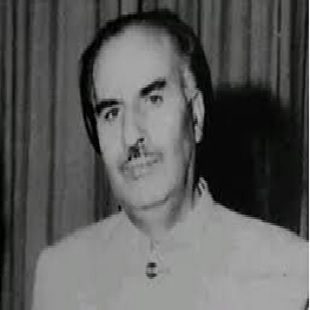
Pt Dina Nath Kaul Nadim

Dina Nath Kaul Nadim Unsung Hero’s Srinagar, Jammu & Kashmir Dina Nath Kaul “Nadim ” was born on 18  March 1916 in Srinagar, Kashmir. His father was Shankar Kaul, who passed away when Nadim was just 8 years old. He was brought up by his mother in poverty. His mother belonged to a village called Murran and was a culturally rooted person. She was well versed in the oral traditions of Lal Vaaks of Shiva Yogini Lalleshwari, part of the culture of that region. That influenced Nadim in shaping his mind. Mother’s singing of Vaaks inculcated in him a penchant for poetry. Nadim acquired his B.A. degree in 1943 and B.Ed. in 1947. After Completing his education, he started teaching in Hindu High School, Srinagar and later rose to the chair of a principal of Lal Ded memorial School in Srinagar. He was also one of the founders of the Gandhi memorial college, the first private degree college in Jammu and Kashmir . Due to his immense contribution in cultural activities and literary aspects, he was appointed as Assistant Director of Social Education. He was also a member of Sahitya Academy. Nadim was a revolutionary poet who wrote on socially relevant themes that had political overtones. His approach was progressive and appealed to all sections of the people. His main focus was to instil in people the sense of nationalism to throw away the foreign yoke and capitalism and work for the humanist society. Between 1938 and 1946, he wrote mainly in Urdu and some poems in Hindi under the influence of Kashmiri poets Brij Narayan Chakbast and Josh Malihabadi. Later he expressed himself in Kashmiri – his mother tongue. His poems Aravalli, prarakhna and Grav, were on themes of patriotism, revolution, and freedom spread Nadim’s spell and his political activism created awareness.  Nadim played a crucial and important role during 1947 when people all over India were fighting the British imperialism and local princely order. He had a pan Indian outlook and an eye for international events. He published the crux of the events and their effect on the freedom of the people in Kashmir and motivated them to work and struggle to bring democratic order. He inspired a whole generation of freedom lovers and his songs, operas and poems set stages and streets on fire. Nadim is a signature in Kashmiri vernacular poetry and is equally loved and respected by people of all religions. When Pakistani army regulars disguised as raiders attacked Jammu and Kashmir, Nadim used his pen and persona to consolidate the people of Kashmir and put a united front against the enemy.  Writers and artists organized themselves hastily under the Cultural Front. Nadim became the vanguard of this group and started composing and reciting poems of protest and revolution. He was a leading light of the Cultural Front comprised prominent literary figures who were at the forefront of the freedom struggle in Kashmir. His passionate patriotic poems. Tsi Mir –I Karvan Ban (you become the leader of the caravan), Naray Inqalab (the call for Revolution), (I have to turn Hindus and Muslims into human beings again), Servani sund khab (the dream Shervani) and Ptitshun Chum (I must Ask) were an awakening call for Kashmiri youth. Nadim inspired the whole generation of freedom fighters and contributed to composing the message of secularism, communal harmony, and amity.  Moreover, the establishment of Radio Kashmir on 31 July 1948, encouraged these artists by providing them a platform which gradually increased its reach and appeal. Radio Kashmir in due course of time became an important medium of communication and connectivity with the people at large thus making it a powerful tool of resistance against the political crisis of those times. It also turned out to be an instrument to thwart the evil designs of the enemies. New slogans were coined and reputed poets and literary figures were invited to spread the message of nationalism, and mobilization of the people against the invaders. His political activism continued even after independence. His aspirations for World Peace landed him as the General Secretary of the State Peace Council in 1950. He was one of the active participants in the Indian peace conferences of 1951 and 1952.  Me Cham Ash Paghic (My Hope for Tomorrow) was his famous composition.                                   I dream of tomorrow                          when the world will be beautiful!     There is a collection of about 150 poems written by Nadim which includes English, Hindi, Urdu and Kashmiri. For the collection of his poem Shihil kul he  was honoured by the Sahitya Academy. Dina Nath Kaul “Nadim” passed away in 1988 when terrorism was raising its head in Kashmir and reached the worst level in 1990. Article Credits : Amrit Mahautsav

No Comments Read More
News

3rd Online Essay Contest 2023

Links to the Online Essay Contest 2023 are open. Click here to REGISTER : Link for Registration of Online Essay Contest 2023 Last Date of submission is 30th December 2023 Please do register first : Complete support will be provided. ONLINE  SUNDAY  GOOGLE  MEETING ON Lt. KASHYAP  BANDHU  TO  START  SOON. Do listen to the informative speech on Pt. Kashyap Bandhu by our Community Bitiya : CLICK HERE More links : Kashyap Bandu’s Song | Initiative by Ramesh Razdan EmailContributor : Ramesh Razdan

No Comments Read More
error: Content is protected !!

Sign In

Register

Reset Password

Please enter your username or email address, you will receive a link to create a new password via email.