Travel

Idduki, Kerala

Nestled amidst the majestic Western Ghats in the state of Kerala, India, lies the picturesque district of Idukki. Renowned for its breathtaking landscapes and serene atmosphere, Idukki is a paradise for nature lovers and adventurers alike. Among its many treasures, three standout attractions are Munnar, Bison Valley, and the sprawling tea and spice plantations that dot the region. At the heart of Idukki, Munnar captivates visitors with its stunning vistas of rolling hills, lush tea gardens, and mist-laden valleys. Known as the “Kashmir of South India,” Munnar’s pristine beauty is unrivalled. Traveler’s are greeted by vast stretches of tea plantations that carpet the slopes, creating a verdant panorama that soothes the soul. The tea estates in Munnar offer guided tours where one can learn about the intricacies of tea production, from plucking the leaves to the process of making the perfect cup of tea. The pleasant climate of Munnar, with cool temperatures and refreshing breezes, adds to the overall charm of the place. Just a short distance away from Munnar lies the hidden gem of Bison Valley. Tucked away in the Idukki Wildlife Sanctuary, Bison Valley is a haven for wildlife enthusiasts and adventure seekers. Here, visitors can spot a variety of fauna, including the Indian bison, elephants, deer, and an array of exotic bird species. Trekking enthusiasts can explore the undulating trails that lead through dense forests, revealing cascading waterfalls and panoramic viewpoints along the way. The untouched beauty of Bison Valley offers a rare opportunity to immerse oneself in the tranquility of nature. Idukki is also famous for its vast tea and spice plantations that add a dash of flavor to the region’s natural charm. As you journey through the winding roads, you’ll encounter sprawling tea estates where the air is fragrant with the aroma of freshly brewed tea. Many plantations open their doors to visitors, allowing them to witness firsthand the intricate processes involved in tea production. From plucking the tea leaves to their processing and packaging, it’s an enlightening experience that highlights the dedication and skill of the workers involved. Moreover, the region is also home to spice plantations that cultivate an array of aromatic spices like cardamom, pepper, cinnamon, and nutmeg. Exploring these spice plantations offers an opportunity to discover the secrets behind Kerala’s famed culinary heritage. In addition to its natural wonders, Idukki also boasts other attractions like the Idukki Arch Dam, Asia’s first arch dam and a marvel of engineering. The district is also blessed with numerous waterfalls, including the stunning Keezharkuthu Falls and the enchanting Thommankuthu Falls. For those seeking a spiritual experience, the hilltop temples of the region, such as the Mangala Devi Temple and the Pattumala Matha Church, provide a serene environment for reflection and devotion. Whether you’re an adventure seeker, a nature lover, or a connoisseur of tea and spices, Idukki has something for everyone. Its scenic landscapes, tea gardens, spice plantations, and captivating wildlife make it a must-visit destination for anyone traveling to Kerala. Prepare to be mesmerized by the enchanting beauty of Idukki, a land that will leave an indelible mark on your heart and soul. Checkout the blog of my backpack exploration of Idduki here : sunnybhan-wanderfile EmailContributor : Sunny Bhan

No Comments Read More
Good Read

Kalidasa – A Kashmiri Pandit

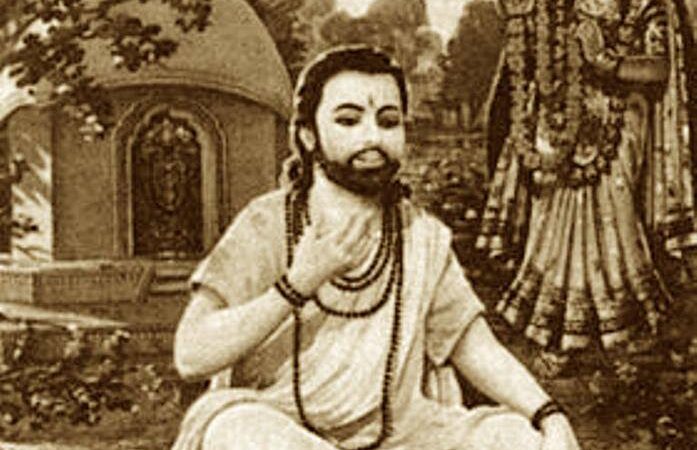
Kalidasa – His period, personality and poetry By K.S.Ramaswami Sastri ; Published by Sri Vani Vilas Press, Srirangam – 1933 Kālidāsa was a Classical Sanskrit writer, widely regarded as the greatest poet and dramatist in the Sanskrit language of India. His plays and poetry are primarily based on the Vedas, the Mahabharata and the Puranas. Much about his life is unknown, only what can be inferred from his poetry and plays. His floruit cannot be dated with precision, but most likely falls within the 4th-5th century CE. Scholars have speculated that Kalidasa may have lived near the Himalayas, in the vicinity of Ujjain, and in Kalinga. This hypothesis is based on Kalidasa’s detailed description of the Himalayas in his Kumārasambhava, the display of his love for Ujjain in Meghadūta, and his highly eulogistic descriptions of Kalingan emperor Hemāngada in Raghuvaṃśa (sixth sarga). Lakshmi Dhar Kalla (1891-1953), a Sanskrit scholar and a Kashmiri Pandit, wrote a book titled The birth-place of Kalidasa (1926), which tries to trace the birthplace of Kalidasa based on his writings. He concluded that Kalidasa was born in Kashmir, but moved southwards, and sought the patronage of local rulers to prosper. The evidence cited by him from Kalidasa’s writings includes: Description of flora and fauna that is found in Kashmir, but not Ujjain or Kalinga: the saffron plant, the deodar trees, musk deer etc. Description of geographical features common to Kashmir, such as tarns and glades Mention of some sites of minor importance that, according to Kalla, can be identified with places in Kashmir. These sites are not very famous outside Kashmir, and therefore, could not have been known to someone not in close touch with Kashmir. Reference to certain legends of Kashmiri origin, such as that of the Nikumbha (mentioned in the Kashmiri text Nilamata Purana); mention (in Shakuntala) of the legend about Kashmir being created from a lake. This legend, mentioned in Nilamata Purana, states that a tribal leader named Ananta drained a lake to kill a demon. Ananta named the site of the former lake (now land) as “Kashmir”, after his father Kashyapa. According to Kalla, Shakuntala is an allegorical dramatization of Pratyabhijna philosophy (a branch of Kashmir Shaivism). Kalla further argues that this branch was not known outside of Kashmir at that time. According to folklore, Kalidasa was originally an unintelligent person, and married a princess. Challenged by his wife, he studied Puranas and other indian literature and become a great poet. Another legend states that he visited Kumaradasa, the king of Sri Lanka formerly known as Ceylon and, because of some treachery, Kalidasa was murdered there. Several ancient and medieval books state that Kalidasa was a court poet of a king named Vikramaditya . A legendary king named Vikramāditya is said to have ruled from Ujjain around 1st century BCE. A section of scholars believe that this legendary Vikramaditya is not a historical figure at all. There are other kings who ruled from Ujjain and adopted the title Vikramaditya, the most notable ones being Chandragupta II (r. 380 CE – 415 CE) and Yasodharman (6th century CE). The most popular theory is that Kalidasa flourished during the reign of Chandragupta II, and therefore lived around 4th-5th century CE. Several Western scholars have supported this theory, since the days of William Jones and A. B. Keith.[9] Many Indian scholars, such as Vasudev Vishnu Mirashi and Ram Gupta, also place Kalidasa in this period. According to this theory, his career might have extended to the reign of Kumaragupta I (r. 414 – 455 CE), and possibly, to that of Skandagupta (r. 455 – 467 CE). The earliest paleographical evidence of Kalidasa is found in a Sanskrit inscription dated c. 473 CE, found at Mandsaur’s Sun temple. His name, along with that of the poet Bharavi, is also mentioned in a stone inscription dated 634 C.E. found at Aihole, located in present-day Karnataka. – Wikipedia Click Here to Download

No Comments Read More
Culture Good Read

Kalhana’s Rajatarangini -Vol 1

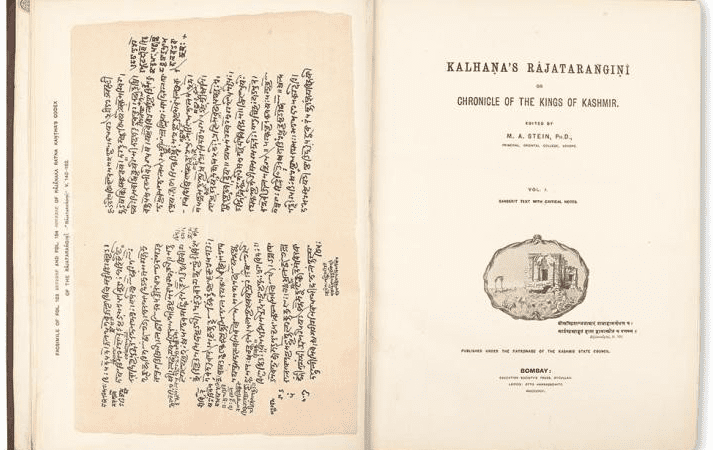
Kalhana’s Rajatarangini – A Chronicle of the Kings of KashmirTranslated by Marc Aurel SteinPublished by Archibald Constable& Co., London – 1900 Volume 1 Rajatarangini (Rājataraṃgiṇī, “The River of Kings”) is a metrical legendary and historical chronicle of the north-western Indian subcontinent, particularly the kings of Kashmir. It was written in Sanskrit by Kashmiri historian Kalhana in the 12th century CE. The work consists of 7826 verses, which are divided into eight books called Tarangas (“waves”). The Rajataringini provides the earliest source on Kashmir that can be labeled as a “historical” text on this region. Although inaccurate in its chronology, the book still provides an invaluable source of information about early Kashmir and its neighbors in the north western parts of the Indian subcontinent, and has been widely referenced by later historians and ethnographers. Little is known about the author Kalhana (c. 12th century CE), apart from what is written in the book. His father Champaka was the minister (Lord of the Gate) in the court of Harsha of Kashmir. In the first Taranga (book) of Rajatarangini, Kalhana expresses his dissatisfaction with the earlier historical books, and presents his own views on how history ought to be written: Verse 7. Fairness: That noble-minded author is alone worthy of praise whose word, like that of a judge, keeps free from love or hatred in relating the facts of the past. Verse 11. Cite earlier authors: The oldest extensive works containing the royal chronicles [of Kashmir] have become fragmentary in consequence of [the appearance of] Suvrata’s composition, who condensed them in order that (their substance) might be easily remembered. Verse 12. Suvrata’s poem, though it has obtained celebrity, does not show dexterity in the exposition of the subject-matter, as it is rendered troublesome [reading] by misplaced learning. Verse 13. Owing to a certain want of care, there is not a single part in Ksemendra’s “List of Kings” (Nrpavali) free from mistakes, though it is the work of a poet. Verse 14. Eleven works of former scholars containing the chronicles of the kings, I have inspected, as well as the [Purana containing the] opinions of the sage Nila. Verse 15. By looking at the inscriptions recording the consecrations of temples and grants by former kings, at laudatory inscriptions and at written works, the trouble arising from many errors has been overcome. Click here

No Comments Read More
Culture Good Read

Kalhana’s Rajatarangini -Vol 2

Kalhana’s Rajatarangini – A Chronicle of the Kings of KashmirTranslated by Marc Aurel SteinPublished by Archibald Constable& Co., London – 1900 ; Volume 2 Rajatarangini (Rājataraṃgiṇī, “The River of Kings”) is a metrical legendary and historical chronicle of the north-western Indian subcontinent, particularly the kings of Kashmir. It was written in Sanskrit by Kashmiri historian Kalhana in the 12th century CE. The work consists of 7826 verses, which are divided into eight books called Tarangas (“waves”). The Rajataringini provides the earliest source on Kashmir that can be labeled as a “historical” text on this region. Although inaccurate in its chronology, the book still provides an invaluable source of information about early Kashmir and its neighbors in the north western parts of the Indian subcontinent, and has been widely referenced by later historians and ethnographers. Little is known about the author Kalhana (c. 12th century CE), apart from what is written in the book. His father Champaka was the minister (Lord of the Gate) in the court of Harsha of Kashmir. In the first Taranga (book) of Rajatarangini, Kalhana expresses his dissatisfaction with the earlier historical books, and presents his own views on how history ought to be written: Verse 7. Fairness: That noble-minded author is alone worthy of praise whose word, like that of a judge, keeps free from love or hatred in relating the facts of the past. Verse 11. Cite earlier authors: The oldest extensive works containing the royal chronicles [of Kashmir] have become fragmentary in consequence of [the appearance of] Suvrata’s composition, who condensed them in order that (their substance) might be easily remembered. Verse 12. Suvrata’s poem, though it has obtained celebrity, does not show dexterity in the exposition of the subject-matter, as it is rendered troublesome [reading] by misplaced learning. Verse 13. Owing to a certain want of care, there is not a single part in Ksemendra’s “List of Kings” (Nrpavali) free from mistakes, though it is the work of a poet. Verse 14. Eleven works of former scholars containing the chronicles of the kings, I have inspected, as well as the [Purana containing the] opinions of the sage Nila. Verse 15. By looking at the inscriptions recording the consecrations of temples and grants by former kings, at laudatory inscriptions and at written works, the trouble arising from many errors has been overcome. Click here

No Comments Read More
Good Read Health Tips

Yoga Makaranda or Yoga Saram (The Essence of Yoga) – Part One

Digital Rare Book: Yoga Makaranda or Yoga Saram (The Essence of Yoga) – Part OneBy T. Krishnamacharya, Mysore Samasthan Acharya (Written in Kannada)Tamil Translation by Sri C.M.V. Krishnamacharya (with the assistance of Sri S. Ranganathadesikacharya)Kannada Edition – 1934 Madurai C.M.V. Press, Tamil Edition – 1938 Book extract:Why should yoga abhyasa be done? What does one gain as a result of practising yoga? What should the duration of the practice be (how much time should be spent on the practice)? What are the reasons for and effects of the practice? People keep asking me these questions. Others ask me various questions related to this subject. I have written this book in order to answer their questions. But before doing that I would like to say a few words. Nowadays, the attitudes of people in our society are changing. They look at all their affairs as business ventures and think only in terms of making a profit or loss. This outlook is on the increase. This attitude is becoming an obstacle to our spiritual progress. It is pathetic and sad that this instant gross business-oriented attitude meant to be applied during transactions with a road-side vendor has been applied to even matters involving sanatana dharma and spiritual truths. One cannot have such a trivial attitude as expecting immediate benefits in auspicious matters like yogabhyasa, worship, sandhya vandanam (salutation to the sun) or chanting of mantras as though one were a labourer who does one hour of work and expects immediate payment. They should not lament that they have not received even one paisa for all the time spent on this. When this pattern of thinking begins, we enter a phase of deterioration day by day. Auspicious matters such as yogabhyasa are not like business ventures conducted at a road-side shop. The readers should note this point carefully. They should reflect on how much we get paid for all the time that we waste every day. For example, how much time have we wasted on sleep or useless chatter or other such activities? All living beings including humans spend a minimum of 6 to 7 hours on sleep. Does anybody think that they have wasted too many hours on this pointless or unprofitable sleep and decide that henceforth they will not sleep? Never. The reason is that if this time is not spent daily on sleep without expectations of remuneration, the body will perish. Maybe one can forego five to six days of sleep. Even this causes the head to start reeling. After that, one has no energy to do anything. Therefore, everybody knows with certainty and from experience that all living beings need a specified amount of sleep irrespective of whether they obtain any material benefit from it. Physical health, enthusiasm and liveliness are all benefits of sleep. Not only that, it is not an exaggeration to say that our body and mind are rejuvenated as a result of sleep. How does sleep acquire this power of rendering so many benefits? Where did this come from? Why is it that without sufficient sleep living beings become dull in their mind, the body heats up, and they develop a dullness of intellect, a lack of enthusiasm, and weakness? It is important to first explain this aspect in detail to readers. The answers to this will clear many doubts the readers have. Through these explanations, the earlier questions will also be answered properly. Click here to download

No Comments Read More
Good Read

Sanatana Dharma

This book was published in 1916 by Benaras Hindu University…Not available now. All the copies got destroyed. One copy was available in the library of California University, which has been digitised by Microsoft. It is a beautiful introduction to Hinduism, without any school affiliations. It is especially suited to youth. You may go through at leisure. It has 304 pages and share it further with your known younger generation kids. This is a rare book on “Sanatana Dharma” TO DOWNLOAD >>>>>> Click on the link below

2 Comments Read More
Temples Travel

Tungnath Chandrashila – The highest temple of Shiva

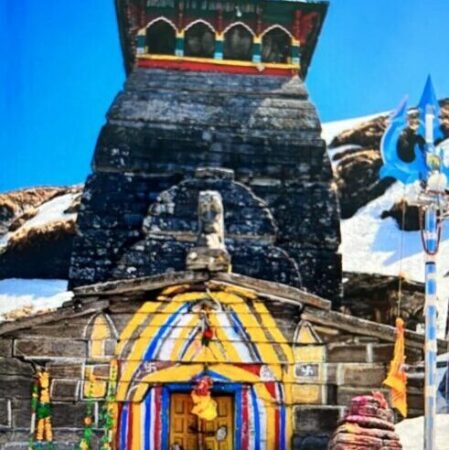
Nestled in the quaint village of Chopta, 30 kilometers from Ukimath in Uttarakhand, lies the majestic Chandrashila Peak. I first heard about this trek while reading Ruskin Bond’s book, ‘All the roads lead to Ganga’. The description of the place, combined with a quick Google search, was enough to make me determined to explore it. Tungnath Temple is a Hindu temple located in the Indian state of Uttarakhand. It is one of the Panch Kedar temples and is dedicated to Lord Shiva. According to Hindu mythology, the temple is believed to have been built by the Pandavas, the legendary figures from the Hindu epic, Mahabharata. Shankaracharya, also known as Adi Shankaracharya, was a revered Hindu philosopher and theologian who lived in the 8th century CE. He is widely regarded as one of the greatest thinkers in the history of Indian philosophy and is credited with reviving and promoting the Advaita Vedanta school of philosophy. Shankaracharya temple located in Srinagar was also built by Adi Shankaracharya during his visit to Kashmir in the early 9th century. The Trek to Shiva’s abode –Our day started with a hearty breakfast before we set out for the trek to Tungnath and Chandrashila Peak. The starting point was marked by a small stone gate with a temple bell, beckoning us to begin our ascent. The path was steep right from the beginning, and as we hiked, we found that the snow was everywhere, making it difficult to walk. We were surprised to see the whole mountain engulfed in snow, which made us realize that we were underdressed for this trek. It took us two hours to reach the Tungnath temple, and we quickly realized that we had to hurry if we wanted to reach Chandrashila, which was another hour’s hike. The whole mountain was covered in snow, and the steep gradient made it very slippery. We didn’t have cramp-ons or spikes, which made the climb even more difficult. After taking a break and clicking some photos, we started the climb to Chandrashila. It was an arduous climb, and the snow was hardened, making it very slippery. As the sun reached the top in the afternoon, the snow melted rapidly, making the patch of soil muddy and even more slippery. It took us one and a half hours to reach the summit, and the view of Kedarnath and Badrinath peaks was breathtaking. We spent some time contemplating the beauty and bowed to the goddess Chandrshila for divine blessings. We were tired and hungry, but we still had to climb down, which would take at least three hours. Since it was all snow till Tungnath, we decided to sledge our way down, which was both scary and fun. It took us around three hours to descend to Chopta, and we were back by 5:30 pm, just in time to watch the sunset over the mountains. Our trek to Tungnath and Chandrashila was a challenging yet fulfilling experience, and it taught us the importance of going on in life no matter what challenges we face. You can checkout the detailed trek experience here : https://sunnybhan-wanderfile.blogspot.com/2022/03/tungnath-chandrashila-trek-uttarakhand.html EmailContributor : Sunny Bhan

No Comments Read More
Good Read

Kashmiri Pandits

From Wikipedia, the free encyclopedia The Kashmiri Pandits (also known as Kashmiri Brahmins)[7] are a group of Kashmiri Hindus and a part of the larger Saraswat Brahmin community of India. They belong to the Pancha Gauda Brahmin group[8] from the Kashmir Valley,[9][10] a mountainous region located within the Indian union territory of Jammu and Kashmir. Kashmiri Pandits are Hindu Kashmiris native to the Kashmir Valley, and the only remaining Hindu Kashmiris after the large-scale of conversion of the Valley’s population to Islam during the medieval times.[11][12] Prompted by the growth of Islamic militancy in the valley, large numbers left in the exodus of the 1990s. Even so, small numbers remain. History Kashmiri Pandits in Srinagar, c. 1895 CE Total population 300,000[1][2][3] to 600,000[4][5][6] (est. living in the Kashmir Valley prior to 1990) Regions with significant populations Historically:KashmirOther communities:Jammu, National Capital Region • Ladakh • Uttar Pradesh • Himachal Pradesh • Uttarakhand • Haryana • Rajasthan • Indian Punjab Languages Sacred languagesSanskrit, Sharada KashmiriEthnic languageKashmiriOther languagesHindi, Dogri, English Religion  Hinduism Related ethnic groups Kashmiris (Kashmiri Hindus, Kashmiri Muslims), Saraswat Brahmins Photograph of the Martand Sun Temple, Hardy Cole’s Archaeological Survey of India Report ‘Illustrations of Ancient Buildings in Kashmir.’ (1869) Early history See also: History of Kashmir The Hindu caste system of the Kashmir region was influenced by the influx of Buddhism from the time of Asoka, around the third century BCE, and a consequence of this was that the traditional lines of varna were blurred, with the exception of that for the Brahmins.[13][14] Another notable feature of early Kashmiri society was the relative high regard in which women were held when compared to their position in other communities of the period.[15] A historically contested region, Northern India was subject to attack from Turkic and Arab regimes from the eighth century onwards, but they generally ignored the mountain-circled Kashmir Valley in favour of easier pickings elsewhere. It was not until the fourteenth century that Muslim rule was finally established in the Valley and when this happened it did not occur primarily as a consequence of invasion so much as because of internal problems resulting from the weak rule and corruption endemic in the Hindu Lohara dynasty.[16][17] Mohibbul Hasan describes this collapse as The Dãmaras (feudal chiefs) grew powerful, defied royal authority, and by their constant revolts plunged the country into confusion. Life and property were not safe, agriculture declined, and there were periods when trade came to a standstill. Socially and morally too the court and the country had sunk to the depths of degradations.[17] The Brahmins had something to be particularly unhappy about during the reign of the last Lohara king, for Sūhadeva chose to include them in his system of onerous taxation, whereas previously they appear to have been exempted.[18] Medieval history Zulju, who was probably a Mongol from Turkistan,[19] wreaked devastation in 1320, when he commanded a force that conquered many regions of the Kashmir Valley. However, Zulju was probably not a Muslim.[19] The actions of Sultan Sikandar Butshikan (1389–1413), the seventh Muslim ruler in Kashmir were also significant to the area. The Sultan has been referred to as an iconoclast because of his destruction of many non-Muslim religious symbols and the manner in which he forced the population to convert or flee. Many followers of the traditional religions who did not convert to Islam instead migrated to other parts of India. The migrants included some Pandits, although it is possible that some of this community relocated for economic reasons as much as to escape the new rulers. Brahmins were at that time generally being offered grants of land in other areas by rulers seeking to utilise the traditionally high literacy and general education of the community, as well as the legitimacy conferred upon them by association. The outcome of this shift both in population and in religion was that the Kashmir Valley became a predominantly Muslim region.[20][21] It was during the 14th century that the Kashmiri Pandits likely split into their three subcastes: Guru/Bāchabat (priests), Jotish (astrologers), and Kārkun (who were historically mainly employed by the government). The majority of Kashmiri Brahmins are Kārkuns, and this is likely due to the conversion of the majority of Kashmiris to Islam, which led to a decrease in demand for Hindu priests, which led most Kashmiri Brahmins to seek secular employment.[22] Butshikan’s heir, the devout Muslim Zain-ul-Abidin (1423–74), was tolerant of Hindus to the extent of sanctioning a return to Hinduism of those who had been forcibly converted to the Muslim faith, as well as becoming involved in the restoration of temples. He respected the learning of these Pandits, to whom he gave land as well as encouraging those who had left to return. He operated a meritocracy and both Brahmins and Buddhists were among his closest advisors.[23] Modern history 1872 painting depicting Srinagar, with Pandits in the foreground Three Hindu priests writing religious texts – 1890s, Jammu and Kashmir Modern D.L. Sheth, the former director of the Center for the Study of Developing Societies in India (CSDS), lists Indian communities that constituted the middle class and were traditionally “Urban and professional” (following professions like doctors, lawyers, teachers, engineers, etc.) immediately after Independence in 1947. This list included the Kashmiri Pandits, the Nagar Brahmins from Gujarat; the South Indian Brahmins; the Punjabi Khatris, and Kayasthas from northern India; Chitpawans and CKPs (Chandraseniya Kayastha Prabhus) from Maharashtra; the Probasi and the Bhadralok Bengalis; the Parsis and the upper crusts of Muslim and Christian communities. According to P.K.Verma, “Education was a common thread that bound together this pan Indian elite” and almost all the members of these communities could read and write English and were educated beyond school.[24][25][26] Recent events Exodus from Kashmir (1989–1995) Main article: Exodus of Kashmiri Hindus The Kashmiri Pandits had been a favoured section of the population of the valley during Dogra rule (1846–1947). 20 per cent of them left the valley as a consequence of the 1950 land reforms,[27] and by 1981 the Pandit population amounted to 5 per cent of the total.[28] An artpiece of three Kashmiri Pandit women They began to leave in much greater numbers in the 1990s during the eruption of militancy, following persecution and threats by radical Islamists and militants. The events of 19 January 1990 were particularly vicious. On that day, mosques issued declarations that the Kashmiri Pandits were Kafirs and that the males had to leave Kashmir, convert to Islam or be killed. Those who chose to the first of these were told to leave their women behind. The Kashmiri Muslims were

No Comments Read More
Culture Kashmiri Recipes

Paneer Kaliya – A Dish for Fasts & Feasts

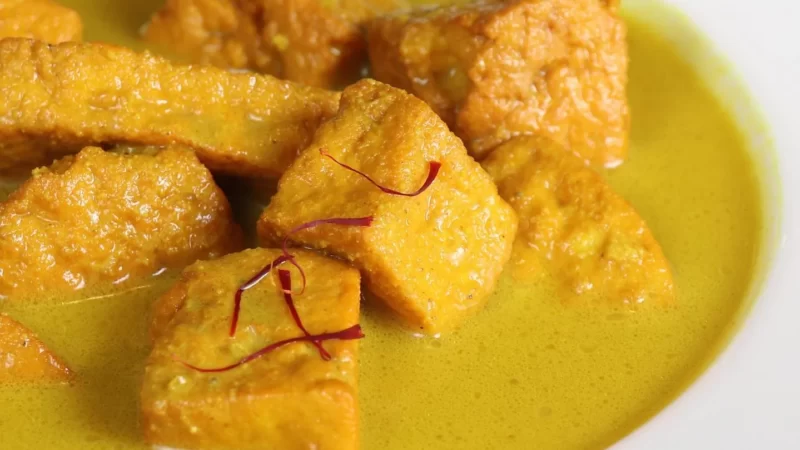
“Making Paneer Kaliya is an art,” says Nalini Sadhu. As the Chef/Curator at Matamaal Restaurant, Nalini has spent years perfecting every recipe on the menu and the Paneer Kaliya is no different. “While preparing Kaliya, instinct is everything. I rely heavily on my instincts because the aroma and colour of the gravy marks a great Kaliya,” she shares. Even though the dish doesn’t require an armoury of spices, it takes a while to perfect the recipe. For her, the mark of a great Kaliya is the sunny/golden yellow colour of the curry. “While following this recipe, keep a close eye on the colour and follow your instincts when it comes to timing and proportion of spices,” she says. Haldi (turmeric) is integral to auspicious occasions. It’s why Teher (yellow rice) is made on special days in a Kashmiri household. The key to a great Kaliya is turmeric. Nalini shares her dismay at browsing through pictures of dull Kaliya preparations and says, “I don’t know why people skimp out on turmeric while making Kaliya! The bright yellow colour is what makes the dish so stunning.” Tchaman (Paneer) Kaliya at Matamaal Restaurant, Gurgaon Despite being a much coveted dish at every feast, Paneer Kaliya is also a soothing balm for those who are unwell. Turmeric is well known for its anti-inflammatory and antioxidant properties, however the curry of a Kaliya is easy on the gut and light on oil and spices. Since Kashmiri cuisine doesn’t rely on onion, garlic and tomatoes, this recipe is a great way to spruce up your ‘vrat ka khana’ (fasting menu). Unlike the fiery red Dum Aloo and Roganjosh, Paneer Kaliya is a relatively lighter dish made regularly in a Kashmiri household—be it a fast or a feast. So, the next time someone tells you that Kashmiri cuisine is predominantly non-vegetarian, whip up this golden surprise to change their mind. Though this is a dish born out of experience and instincts, here’s Nalini Sadhu’s recipe for Paneer Kaliya from Matamaal’s kitchen: Ingredients Paneer (Cottage Cheese): 200 gramsSaunf (Fennel powder): 1 tablespoonSounth: Half teaspoonTurmeric powder: 1 teaspoonMustard oil: 2 tablespoonsHeeng: A pinchCloves: 2 podsGreen cardamom: 2 pods (slightly pounded)Black cardamom: 1 podBay leaves (Tej Patta): 2Garam masala: Half teaspoonMilk: Half cup ProcedurePart 1 Part 2 Pro tip: Make sure the paneer doesn’t stick to the pan/kadhai while frying. Nalini shares, “I don’t know the reason behind this but paneer sticking to the kadhai was considered inauspicious in Kashmir! So, make sure the oil is at the right temperature to avoid this faux pas.”

No Comments Read More
error: Content is protected !!

Sign In

Register

Reset Password

Please enter your username or email address, you will receive a link to create a new password via email.