Dictionary of Kashmiri Proverbs & Sayings
A rare book, published in 1885 Enjoy Reading

A rare book, published in 1885 Enjoy Reading

Series : Rare books The Valley of KashmirBy Sir Walter Roper LawrencePublished by Henry Frowde, London – 1895 Download :

Special thanks for Mr Lalit Kaul for compiling this wonderful calendar for the community.

“A History of Kashmiri Pandits” by Justice Jia Lal Kilam, was first published in 1955. It was very well received, much for its record of the socio-political & historical importance. The scholars & general readers appreciated the publication within the Kashmiri pandit community & outside as well. The contents of the publication are relevant even today, not only by way of filling the void. It also provides valuable source material on the past history of Kashmir, with particular reference to the Kashmiri pandits as the earliest settlers of that ancient and beautiful land. It further provides background to the current turmoil of this illustrious & oppressed community. Download reference : https://archive.org/details/a-history-of-kashmiri-pandits-jia-lal-kilam/page/n3/mode/2up DOWNLOAD HERE
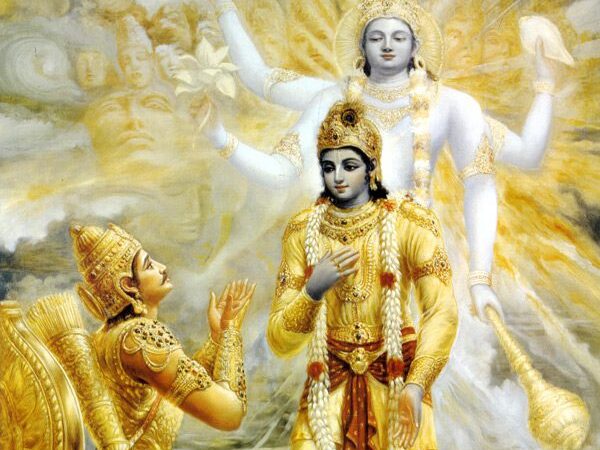
The Bhagavad Gita , often referred to as the Gita, is a 700-verse Hindu scripture, which is part of the epic Mahabharata. It forms the chapters 23–40 of book 6 of the Mahabharata called the Bhishma Parva. The work is dated to the second half of the first millennium BCE. Typical of the Hindu synthesis, it is considered one of the holy scriptures of Hinduism. The Bhagavad Gita is set in a narrative framework of dialogue between the Pandava prince Arjuna and his charioteer guide Krishna, an avatar of Lord Vishnu. At the start of the Kurukshetra War between the Pandavas and the Kauravas, Arjuna despairs thinking about the violence and death the war will cause in the battle against his kin and becomes emotionally preoccupied with a dilemma. Wondering if he should renounce the war, Arjuna seeks the counsel of Krishna, whose answers and discourse constitute the Bhagavad Gita. Krishna counsels Arjuna to “fulfil his Kshatriya (warrior) duty” for the upholdment of dharma. The Krishna–Arjuna dialogue covers a broad range of spiritual topics, touching upon moral and ethical dilemmas, and philosophical issues that go far beyond the war that Arjuna faces.The setting of the text in a battlefield has been interpreted as an allegory for the struggles of human life. Summarising the Upanishadic conceptions of God, the Gita posits the existence of an individual self (Atman) and the supreme self (Brahman) within each being. The dialogue between the prince and his charioteer has been interpreted as a metaphor for an immortal dialogue between the human self and God. Commentators of Vedanta read varying notions in the Bhagavad Gita about the relationship between the Atman (individual Self) and Brahman (supreme Self); Advaita Vedanta affirms on the non-dualism of Atman and Brahman, Vishishtadvaita asserts qualified non-dualism with Atman and Brahman being related but different in certain aspects, while Dvaita Vedanta declares the complete duality of Atman and Brahman. As per Hindu mythology, the Bhagavad Gita was written by the god Ganesha, as told to him by the sage Veda Vyasa. The Bhagavad Gita presents a synthesis of various Hindu ideas about dharma, theistic bhakti, and the yogic ideal of moksha. The text covers Jñāna, Bhakti, Karma, and Rāja yogas, while incorporating ideas from the Samkhya-Yoga philosophy. The Bhagavad Gita is one of the most revered Hindu texts and has a unique pan-Hindu influence. Numerous commentaries have been written on the Bhagavad Gita with differing views on its essentials. Note : The content posted belongs to respective publishers / authors. These are purely for Personal use and should not be used for any commercial purposes. Download

Puran’s Read all about Puran’s at one place. Thousands of pages from Rare books summarised for you. Agni Puran Bhagwat Puran Bhavishya Puran Brahma Puran Garuda Puran Kurma Puran Ling Puran Markandya Puran Narad Puran Padma Puran Shiv Puran Skand Puran Brahm Vaivatra Puran Vaman Puran Varah Puran Vishnu Puran Narsimha Puran Rare Book on Puran’s Click on the Names to open the PDF downloadable file. Happy Reading !
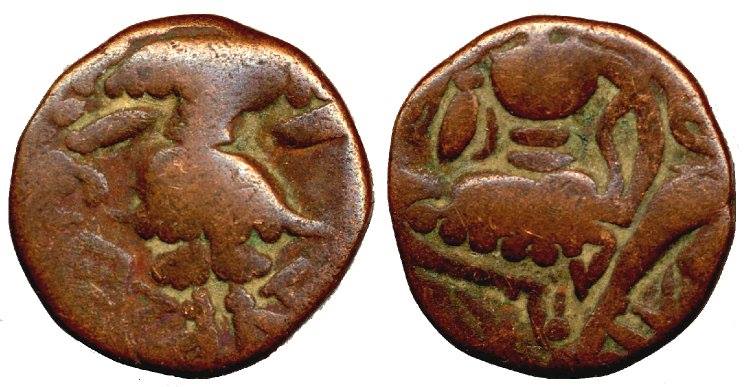
KINGS OF KASHMIRABeing a translation of the Sanskrita work Rajataranggini of Kalhana PanditaBy Jogesh Chunder DuttPublished by Trubner & Co., London – 1879VOLUME 3 Rare Book:KINGS OF KASHMIRABeing a translation of the Sanskrita work Rajataranggini of Kalhana PanditaBy Jogesh Chunder DuttPublished by Trubner & Co., London – 1879VOLUME 3 Image:Copper alloy coin.(obverse) Stylised figure of king standing to front, with right hand lowered to an altar. Head of figure is off flan.(reverse) Figure of goddess seated to front, legs crossed. Head of figure is off flan.Ruler: Toramana IIKarkota dynasty540-800 ADMinted in: Kashmir © Trustees of the British Museum Download here
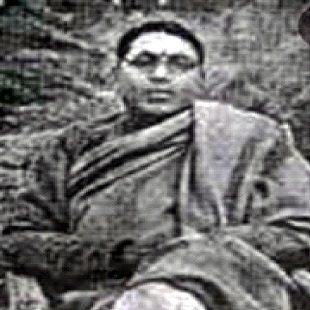
Tarachand Bhat, famous all over Jammu and Kashmir as Pandit Kashyap Bandhu, was a renowned freedom fighter and social reformer. He was born on 24 March 1889 to Thakur Bhat in Geeru (Nurpura) village of Kashmir. At the time of his birth, the state of Jammu and Kashmir was ruled by Maharaja Pratap Singh. After passing his matriculation examination in 1919, he started writing poetry with the pen name ‘Bulbul’. Giving it a purposeful direction, Kashyap Bandhu made efficient use of his passion as a medium to express his opinion on the prevailing socio-economic and political conditions. Meanwhile, he got the job of Shajrakash in the revenue department but it was not to his liking. Thereafter, Kashyap Bandhu left Kashmir and went to Lahore where he got influenced by the ideology of the Arya Samaj and joined Virjanand ashram. Being impressed with his inordinate personality, keen interest in social service and strict adherence to veganism, Sri Vishwabandhu ji, Principal/Chief of the ashram named him Kashyap Bandhu. This incident became a turning point in his life. Since then, he did not look back and worked tirelessly to ameliorate of the weak and marginalized sections of society. Kashyap Bandhu was intensely pained to see the deplorable condition of the Kashmiri laborers who used to migrate to Lahore in search of livelihood during winter season. He strived for the rights of these Kashmiri laborers and through his forceful writings in Akhbar-e- Aam, Bahar-e-Kashmir, Akhbar Kashmiri, and some other local dailies of Lahore, Kashyap Bandhu raised his voice against the atrocities meted out to the people of his community. He not only sensitized these ignorant and illiterate workers but also organized them and started the Kashmiri Mazdoor Board (Labour Board) and himself became its secretary. The Board played an instrumental role in making the workers aware of their rights which subsequently inspired them to live a dignified life. During his stay in Lahore, Kashyap Bandhu was deeply influenced by revolutionary ideas. He joined Bhagat Singh’s revolutionary organization and was also arrested and imprisoned in connection with Saunder’s murder case but was later released. It was his first arrest. Further, due to his active participation in different socio-political movements, he was lodged in various jails in Kathua, Bhaderwah, Reasi, and Udhampur. From 1931-1961, Kashyap Bandhu spent almost 8 years in jail for the cause of the nation and freedom struggle. Kashyap Bandhu was a pioneer in the art of journalism. He fearlessly used the might of his pen to write forceful editorials against the feudal establishments and corrupt bureaucracy. Through the columns of The Martand, of which he was the founder editor, and various other local newspapers like The Kesari and The Desh, Kashyap Bandhu raised his voice against the social evils prevailing in society and expressed his strong yearning for social change. His social reformation included widow remarriage and education of the Kashmiri Pandit girls. The thought-provoking writings of Kashyap Bandhu produced an electrifying effect on the thinking and conduct of the Kashmiri Pandits who were living in an abject conservatism and a fetid social milieu. At the request of the Kashmiri Pandit activists and society, Kashyap Bandhu came back to Kashmir and started working for the upliftment of his community. He fought against the discrimination being meted out to the community in Government jobs. It was on his arrival in Kashmir that a premier body for the upliftment of the Kashmiri Pandits called ‘Sanatan DharamYuvak Sabha’ was formed at Sharika Bhawan, Sheetal Nath, Srinagar. With Martand as its official organ, the Yuvak Sabha became a nerve center of Kashmiri Pandit agitations and social reform activities. Kashyap Bandhu played a key role in the Roti Agitation of 1933-34 which aimed at the empowerment of Kashmiri Pandits. He was at the forefront in the fight against the imperialist forces during the freedom movement and also played a vital role during the Pakistani tribal raids of October 1947. The economic blockade caused by Pakistan in the after of the partition and the subsequent tribal raids disrupted the life of the people of Jammu and Kashmir. The loot, plunder, and merciless killings of Hindus and Sikhs by Pakistani raiders led to the migration of thousands of refugees from the nearby border towns and villages to the capital city of Srinagar. Sensitizing the rising critical situation, an emergency administration was set up by Maharaja Hari Singh with Sheikh Abdullah as the head and Kashyap Bandhu was appointed as the Emergency Relief and Rehabilitation officer. Bandhu ji played a vital role to safeguard the interests of the Hindu and Sikh communities. His priority was to attend to the immediate needs of the refugees migrating from the areas devastated by the Pakistani tribal invasion. He efficiently and dedicatedly carried out his job to accommodate and feed them during those adverse times. The liberal vision and progressive outlook of the poet-turned-social activist Kashyap Bandhu became a source of inspiration for the coming generation to work for the betterment of humankind. He merged with the super Divine on 18th December 1985. In the annals of Kashmir history, Bandhu ji will always be remembered as a firebrand political activist, a fearless journalist, and a great freedom fighter who immensely contributed to the freedom struggle of the nation. Like him may not be born for centuries to come.
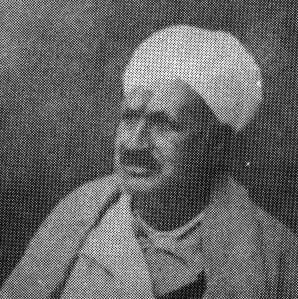
Pandit Govind Kaul Born in 1846 in Srinagar as the eldest son of Pandit Balbhadra Kaul, a universally respected scholar of his times (1819-96), Govind Kaul (G.K) had scholarship running in the family. His grandfather, Pandit Taba Kaul, too was a reputed scholar, having family ties with the famous Pandit Birbal Dhar who persuaded Ranjit Singh to free Kashmir from the tyranny of Afghan rule. G.K. and Birbal Dhar’s grandson Ramjoo Dhar, maintained the ties as friends. G.K. not only studied Persian and Sanskrit in keeping with the family tradition, he also acquired a good knowledge of English as well as western ways of life. To keep the record of history straight, it must be stated that G.K. and Ramjoo Dhar learnt English much before Pandit Anand Kaul and Pandit Shiv Ram Bhan. G.K. came to know a good deal about world affairs also through Ramjoo Dhar who held an important administrative position . Soon G.K. acquired fame for his erudition, particularly as a scholar of Alamkara Shastra (poetics), Vyakarna (grammar), Nyaya (logic), and Shiva Sutras. He was equally well versed in the knowledge of the epics and the Puranas. By the time he was 28, G.K. was already regarded as a scholar of considerable stature. In 1874, he was appointed incharge Translation Department set up by Maharaja Ranbir singh. It was around that time that he undertook, jointly with Pandit Sahaz Bhatt, to translate the Sanskrit chronicles of Kashmir into Hindi- a project which he, unfortunately, was not able to complete. With the winding up of the Translation Department in 1884, it was a trying time for G.K. He lost his job and could not find any alternative avenue to pursue his scholastic goals. Eventually, he had to settle for a teacher’s job at the state run Sanskrit Pathshala in Srinagar. But that too did not last and he was again without a regular job. In the meanwhile, however, George Buhler, that doyen of European Indologists, had spotted the Pandit for his great learning and eruditon. It was Buhler’s commendatory reference that attracted Sir Aurel Stein’s attention towards G.K. and he solicited his assistance in translating Kalhan’s Rajatarangini-a job that G . K along with Pandit Sahaz Bhatt did with utmost competence from 1888 to 1896, and to stein’s great satisfaction. G.K. went into another collaboration with Stein and fellow scholar Sahaz Bhatt when they classified and catalogued more than six thousand Sanskrit manuscripts for Maharaja Ranbir Singh’s library at Raghunath Temple, Jammu. Yet another contribution G.K. made was to compile Kashmiri folk tales with Stein, which the latter formally edited with George Grierson and publishcd in 1917 as ” Hatim’s Tales”. The tales, supposedly told by one Hatim Tilawony, were interpreted by G.K. G.K. also rendered assistance to Grierson in the compilation of his Kashmiri dictionary, but did not live to see the work completed. Grierson went on to reeord later that G.K’s assistance to him was “one of the many debts he ever owed to Stein”. On G.K’s death in June 1899, a shocked Stein lamented that G.K., ”like another Kalhana departed as my best Indian friend beyond all hope of reunion in this Janma”. Paying fulsome tributes to him, Stein wrote: “Whenever Govind Kaul was by my side, whether in the dusty exile of Lahore or alpine coolness of Mohand Marg in Kashmir, I was in continuity with the past as the historical student of India. His personality embodied all that change of ages indicated and showed as the mind and psyche of India.” Profile posted above Credit : N.S. KASHMIR RESEARCH INSTITUTE BONUS Essential for those who want to learn Kashmiri Words and Meanings from this Jewel of more than 600 pages Click here to download a rare book : HATIMs TALES ( Courtesy : Indira Gandhi National Centre for the Arts )
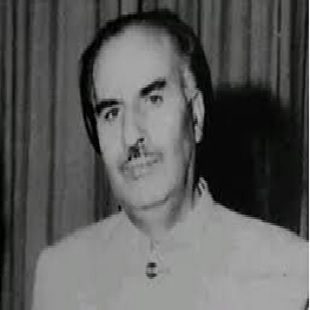
Dina Nath Kaul Nadim Unsung Hero’s Srinagar, Jammu & Kashmir Dina Nath Kaul “Nadim ” was born on 18 March 1916 in Srinagar, Kashmir. His father was Shankar Kaul, who passed away when Nadim was just 8 years old. He was brought up by his mother in poverty. His mother belonged to a village called Murran and was a culturally rooted person. She was well versed in the oral traditions of Lal Vaaks of Shiva Yogini Lalleshwari, part of the culture of that region. That influenced Nadim in shaping his mind. Mother’s singing of Vaaks inculcated in him a penchant for poetry. Nadim acquired his B.A. degree in 1943 and B.Ed. in 1947. After Completing his education, he started teaching in Hindu High School, Srinagar and later rose to the chair of a principal of Lal Ded memorial School in Srinagar. He was also one of the founders of the Gandhi memorial college, the first private degree college in Jammu and Kashmir . Due to his immense contribution in cultural activities and literary aspects, he was appointed as Assistant Director of Social Education. He was also a member of Sahitya Academy. Nadim was a revolutionary poet who wrote on socially relevant themes that had political overtones. His approach was progressive and appealed to all sections of the people. His main focus was to instil in people the sense of nationalism to throw away the foreign yoke and capitalism and work for the humanist society. Between 1938 and 1946, he wrote mainly in Urdu and some poems in Hindi under the influence of Kashmiri poets Brij Narayan Chakbast and Josh Malihabadi. Later he expressed himself in Kashmiri – his mother tongue. His poems Aravalli, prarakhna and Grav, were on themes of patriotism, revolution, and freedom spread Nadim’s spell and his political activism created awareness. Nadim played a crucial and important role during 1947 when people all over India were fighting the British imperialism and local princely order. He had a pan Indian outlook and an eye for international events. He published the crux of the events and their effect on the freedom of the people in Kashmir and motivated them to work and struggle to bring democratic order. He inspired a whole generation of freedom lovers and his songs, operas and poems set stages and streets on fire. Nadim is a signature in Kashmiri vernacular poetry and is equally loved and respected by people of all religions. When Pakistani army regulars disguised as raiders attacked Jammu and Kashmir, Nadim used his pen and persona to consolidate the people of Kashmir and put a united front against the enemy. Writers and artists organized themselves hastily under the Cultural Front. Nadim became the vanguard of this group and started composing and reciting poems of protest and revolution. He was a leading light of the Cultural Front comprised prominent literary figures who were at the forefront of the freedom struggle in Kashmir. His passionate patriotic poems. Tsi Mir –I Karvan Ban (you become the leader of the caravan), Naray Inqalab (the call for Revolution), (I have to turn Hindus and Muslims into human beings again), Servani sund khab (the dream Shervani) and Ptitshun Chum (I must Ask) were an awakening call for Kashmiri youth. Nadim inspired the whole generation of freedom fighters and contributed to composing the message of secularism, communal harmony, and amity. Moreover, the establishment of Radio Kashmir on 31 July 1948, encouraged these artists by providing them a platform which gradually increased its reach and appeal. Radio Kashmir in due course of time became an important medium of communication and connectivity with the people at large thus making it a powerful tool of resistance against the political crisis of those times. It also turned out to be an instrument to thwart the evil designs of the enemies. New slogans were coined and reputed poets and literary figures were invited to spread the message of nationalism, and mobilization of the people against the invaders. His political activism continued even after independence. His aspirations for World Peace landed him as the General Secretary of the State Peace Council in 1950. He was one of the active participants in the Indian peace conferences of 1951 and 1952. Me Cham Ash Paghic (My Hope for Tomorrow) was his famous composition. I dream of tomorrow when the world will be beautiful! There is a collection of about 150 poems written by Nadim which includes English, Hindi, Urdu and Kashmiri. For the collection of his poem Shihil kul he was honoured by the Sahitya Academy. Dina Nath Kaul “Nadim” passed away in 1988 when terrorism was raising its head in Kashmir and reached the worst level in 1990. Article Credits : Amrit Mahautsav