Culture Good Read

Kalhana’s Rajatarangini -Vol 2

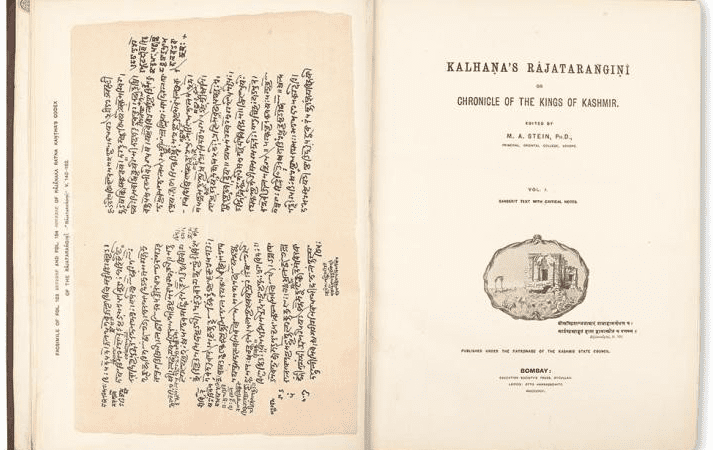
Kalhana’s Rajatarangini – A Chronicle of the Kings of KashmirTranslated by Marc Aurel SteinPublished by Archibald Constable& Co., London – 1900 ; Volume 2 Rajatarangini (Rājataraṃgiṇī, “The River of Kings”) is a metrical legendary and historical chronicle of the north-western Indian subcontinent, particularly the kings of Kashmir. It was written in Sanskrit by Kashmiri historian Kalhana in the 12th century CE. The work consists of 7826 verses, which are divided into eight books called Tarangas (“waves”). The Rajataringini provides the earliest source on Kashmir that can be labeled as a “historical” text on this region. Although inaccurate in its chronology, the book still provides an invaluable source of information about early Kashmir and its neighbors in the north western parts of the Indian subcontinent, and has been widely referenced by later historians and ethnographers. Little is known about the author Kalhana (c. 12th century CE), apart from what is written in the book. His father Champaka was the minister (Lord of the Gate) in the court of Harsha of Kashmir. In the first Taranga (book) of Rajatarangini, Kalhana expresses his dissatisfaction with the earlier historical books, and presents his own views on how history ought to be written: Verse 7. Fairness: That noble-minded author is alone worthy of praise whose word, like that of a judge, keeps free from love or hatred in relating the facts of the past. Verse 11. Cite earlier authors: The oldest extensive works containing the royal chronicles [of Kashmir] have become fragmentary in consequence of [the appearance of] Suvrata’s composition, who condensed them in order that (their substance) might be easily remembered. Verse 12. Suvrata’s poem, though it has obtained celebrity, does not show dexterity in the exposition of the subject-matter, as it is rendered troublesome [reading] by misplaced learning. Verse 13. Owing to a certain want of care, there is not a single part in Ksemendra’s “List of Kings” (Nrpavali) free from mistakes, though it is the work of a poet. Verse 14. Eleven works of former scholars containing the chronicles of the kings, I have inspected, as well as the [Purana containing the] opinions of the sage Nila. Verse 15. By looking at the inscriptions recording the consecrations of temples and grants by former kings, at laudatory inscriptions and at written works, the trouble arising from many errors has been overcome. Click here

No Comments Read More
Good Read Health Tips

Yoga Makaranda or Yoga Saram (The Essence of Yoga) – Part One

Digital Rare Book: Yoga Makaranda or Yoga Saram (The Essence of Yoga) – Part OneBy T. Krishnamacharya, Mysore Samasthan Acharya (Written in Kannada)Tamil Translation by Sri C.M.V. Krishnamacharya (with the assistance of Sri S. Ranganathadesikacharya)Kannada Edition – 1934 Madurai C.M.V. Press, Tamil Edition – 1938 Book extract:Why should yoga abhyasa be done? What does one gain as a result of practising yoga? What should the duration of the practice be (how much time should be spent on the practice)? What are the reasons for and effects of the practice? People keep asking me these questions. Others ask me various questions related to this subject. I have written this book in order to answer their questions. But before doing that I would like to say a few words. Nowadays, the attitudes of people in our society are changing. They look at all their affairs as business ventures and think only in terms of making a profit or loss. This outlook is on the increase. This attitude is becoming an obstacle to our spiritual progress. It is pathetic and sad that this instant gross business-oriented attitude meant to be applied during transactions with a road-side vendor has been applied to even matters involving sanatana dharma and spiritual truths. One cannot have such a trivial attitude as expecting immediate benefits in auspicious matters like yogabhyasa, worship, sandhya vandanam (salutation to the sun) or chanting of mantras as though one were a labourer who does one hour of work and expects immediate payment. They should not lament that they have not received even one paisa for all the time spent on this. When this pattern of thinking begins, we enter a phase of deterioration day by day. Auspicious matters such as yogabhyasa are not like business ventures conducted at a road-side shop. The readers should note this point carefully. They should reflect on how much we get paid for all the time that we waste every day. For example, how much time have we wasted on sleep or useless chatter or other such activities? All living beings including humans spend a minimum of 6 to 7 hours on sleep. Does anybody think that they have wasted too many hours on this pointless or unprofitable sleep and decide that henceforth they will not sleep? Never. The reason is that if this time is not spent daily on sleep without expectations of remuneration, the body will perish. Maybe one can forego five to six days of sleep. Even this causes the head to start reeling. After that, one has no energy to do anything. Therefore, everybody knows with certainty and from experience that all living beings need a specified amount of sleep irrespective of whether they obtain any material benefit from it. Physical health, enthusiasm and liveliness are all benefits of sleep. Not only that, it is not an exaggeration to say that our body and mind are rejuvenated as a result of sleep. How does sleep acquire this power of rendering so many benefits? Where did this come from? Why is it that without sufficient sleep living beings become dull in their mind, the body heats up, and they develop a dullness of intellect, a lack of enthusiasm, and weakness? It is important to first explain this aspect in detail to readers. The answers to this will clear many doubts the readers have. Through these explanations, the earlier questions will also be answered properly. Click here to download

No Comments Read More
Good Read

Sanatana Dharma

This book was published in 1916 by Benaras Hindu University…Not available now. All the copies got destroyed. One copy was available in the library of California University, which has been digitised by Microsoft. It is a beautiful introduction to Hinduism, without any school affiliations. It is especially suited to youth. You may go through at leisure. It has 304 pages and share it further with your known younger generation kids. This is a rare book on “Sanatana Dharma” TO DOWNLOAD >>>>>> Click on the link below

2 Comments Read More
Good Read

Kashmiri Pandits

From Wikipedia, the free encyclopedia The Kashmiri Pandits (also known as Kashmiri Brahmins)[7] are a group of Kashmiri Hindus and a part of the larger Saraswat Brahmin community of India. They belong to the Pancha Gauda Brahmin group[8] from the Kashmir Valley,[9][10] a mountainous region located within the Indian union territory of Jammu and Kashmir. Kashmiri Pandits are Hindu Kashmiris native to the Kashmir Valley, and the only remaining Hindu Kashmiris after the large-scale of conversion of the Valley’s population to Islam during the medieval times.[11][12] Prompted by the growth of Islamic militancy in the valley, large numbers left in the exodus of the 1990s. Even so, small numbers remain. History Kashmiri Pandits in Srinagar, c. 1895 CE Total population 300,000[1][2][3] to 600,000[4][5][6] (est. living in the Kashmir Valley prior to 1990) Regions with significant populations Historically:KashmirOther communities:Jammu, National Capital Region • Ladakh • Uttar Pradesh • Himachal Pradesh • Uttarakhand • Haryana • Rajasthan • Indian Punjab Languages Sacred languagesSanskrit, Sharada KashmiriEthnic languageKashmiriOther languagesHindi, Dogri, English Religion  Hinduism Related ethnic groups Kashmiris (Kashmiri Hindus, Kashmiri Muslims), Saraswat Brahmins Photograph of the Martand Sun Temple, Hardy Cole’s Archaeological Survey of India Report ‘Illustrations of Ancient Buildings in Kashmir.’ (1869) Early history See also: History of Kashmir The Hindu caste system of the Kashmir region was influenced by the influx of Buddhism from the time of Asoka, around the third century BCE, and a consequence of this was that the traditional lines of varna were blurred, with the exception of that for the Brahmins.[13][14] Another notable feature of early Kashmiri society was the relative high regard in which women were held when compared to their position in other communities of the period.[15] A historically contested region, Northern India was subject to attack from Turkic and Arab regimes from the eighth century onwards, but they generally ignored the mountain-circled Kashmir Valley in favour of easier pickings elsewhere. It was not until the fourteenth century that Muslim rule was finally established in the Valley and when this happened it did not occur primarily as a consequence of invasion so much as because of internal problems resulting from the weak rule and corruption endemic in the Hindu Lohara dynasty.[16][17] Mohibbul Hasan describes this collapse as The Dãmaras (feudal chiefs) grew powerful, defied royal authority, and by their constant revolts plunged the country into confusion. Life and property were not safe, agriculture declined, and there were periods when trade came to a standstill. Socially and morally too the court and the country had sunk to the depths of degradations.[17] The Brahmins had something to be particularly unhappy about during the reign of the last Lohara king, for Sūhadeva chose to include them in his system of onerous taxation, whereas previously they appear to have been exempted.[18] Medieval history Zulju, who was probably a Mongol from Turkistan,[19] wreaked devastation in 1320, when he commanded a force that conquered many regions of the Kashmir Valley. However, Zulju was probably not a Muslim.[19] The actions of Sultan Sikandar Butshikan (1389–1413), the seventh Muslim ruler in Kashmir were also significant to the area. The Sultan has been referred to as an iconoclast because of his destruction of many non-Muslim religious symbols and the manner in which he forced the population to convert or flee. Many followers of the traditional religions who did not convert to Islam instead migrated to other parts of India. The migrants included some Pandits, although it is possible that some of this community relocated for economic reasons as much as to escape the new rulers. Brahmins were at that time generally being offered grants of land in other areas by rulers seeking to utilise the traditionally high literacy and general education of the community, as well as the legitimacy conferred upon them by association. The outcome of this shift both in population and in religion was that the Kashmir Valley became a predominantly Muslim region.[20][21] It was during the 14th century that the Kashmiri Pandits likely split into their three subcastes: Guru/Bāchabat (priests), Jotish (astrologers), and Kārkun (who were historically mainly employed by the government). The majority of Kashmiri Brahmins are Kārkuns, and this is likely due to the conversion of the majority of Kashmiris to Islam, which led to a decrease in demand for Hindu priests, which led most Kashmiri Brahmins to seek secular employment.[22] Butshikan’s heir, the devout Muslim Zain-ul-Abidin (1423–74), was tolerant of Hindus to the extent of sanctioning a return to Hinduism of those who had been forcibly converted to the Muslim faith, as well as becoming involved in the restoration of temples. He respected the learning of these Pandits, to whom he gave land as well as encouraging those who had left to return. He operated a meritocracy and both Brahmins and Buddhists were among his closest advisors.[23] Modern history 1872 painting depicting Srinagar, with Pandits in the foreground Three Hindu priests writing religious texts – 1890s, Jammu and Kashmir Modern D.L. Sheth, the former director of the Center for the Study of Developing Societies in India (CSDS), lists Indian communities that constituted the middle class and were traditionally “Urban and professional” (following professions like doctors, lawyers, teachers, engineers, etc.) immediately after Independence in 1947. This list included the Kashmiri Pandits, the Nagar Brahmins from Gujarat; the South Indian Brahmins; the Punjabi Khatris, and Kayasthas from northern India; Chitpawans and CKPs (Chandraseniya Kayastha Prabhus) from Maharashtra; the Probasi and the Bhadralok Bengalis; the Parsis and the upper crusts of Muslim and Christian communities. According to P.K.Verma, “Education was a common thread that bound together this pan Indian elite” and almost all the members of these communities could read and write English and were educated beyond school.[24][25][26] Recent events Exodus from Kashmir (1989–1995) Main article: Exodus of Kashmiri Hindus The Kashmiri Pandits had been a favoured section of the population of the valley during Dogra rule (1846–1947). 20 per cent of them left the valley as a consequence of the 1950 land reforms,[27] and by 1981 the Pandit population amounted to 5 per cent of the total.[28] An artpiece of three Kashmiri Pandit women They began to leave in much greater numbers in the 1990s during the eruption of militancy, following persecution and threats by radical Islamists and militants. The events of 19 January 1990 were particularly vicious. On that day, mosques issued declarations that the Kashmiri Pandits were Kafirs and that the males had to leave Kashmir, convert to Islam or be killed. Those who chose to the first of these were told to leave their women behind. The Kashmiri Muslims were

No Comments Read More
Good Read Health Tips

Phone Addiction: Warning Signs And Treatment

What Is Phone Addiction? Phone addiction is the obsessive use of a smartphone. The behavioral addiction is often dubbed as “nomophobia,” or the fear of being without a mobile device. There are over 3.8 billion smartphone users in the world. Research published by Virgin Mobile discovered that those billions of smartphone users receive 427% more messages and notifications than they did a decade ago. They also send 278% more texts. The rise in phone use seems like a natural necessity for modern life, however, it can also cause concern and negative consequences. The heavy use of these devices has consumers questioning their cellular habits. According to Google Trends, since 2004 searches for “cell phone addiction” have been rising.  Designed To Be Addictive  Access to a smartphone can make life easier by making information accessible. Still, the convenience comes at a price. The devices are carefully designed to be hard to put down. Through its colors, sounds, and vibrations, the technology purposely keeps its users engaged. According to former Google design ethicist Tristan Harris, features like “pull to refresh” were inspired by slot machines and other casino games. Designers and engineers meticulously develop every aspect of the device to create fanatical users.  Negative Effects Of Phone Addiction  Chronic phone use is a recently developed form of addiction. The American Psychiatric Association does not officially recognize the condition. Still, it is acknowledged as a behavioral addiction by many medical professionals and researchers worldwide. According to several studies, over time, the devoted use of smartphones can alter and negatively impact an individual much like gambling. Phone addiction may lead to:  Chronic phone use can also cause other physical dysfunctions, like GABA (a neurotransmitter in the brain) dysfunction and a loss of grey matter in the brain, which are highly correlated to substance use disorders.  GABA Dysfunction Chronic phone overuse is proven to change reward circuits in the brain chemically. One of the primary affected neurotransmitters is gamma-aminobutyric acid (GABA). GABA is an inhibitory neurotransmitter that produces a calming or euphoric effect. It can even control fear and anxiety. The inhibitor plays a significant role in addiction by rewarding substance use and reinforcing addictive behaviors. Research shows that chronic phone use can increase or decrease GABA production. Disturbances to the GABA system are proven to be a warning sign of addiction. In a study by the Radiological Society of North America, heavy phone use was linked to an upsetting ratio of GABA to other neurotransmitters. When the teen test subjects received cognitive behavioral therapy (CBT) for the disorder, their brain chemistry reverted to a non-addicted ratio.  Decrease In Grey Matter  Grey matter in the brain is connected to the part of the central nervous system responsible for enabling individuals to control movement, memory, and emotions. A recent study scanned participants’ brains with a phone addiction and discovered a change in their brain’s grey matter. According to the researchers, the physical shape and size of their brains resembled that of drug users. Grey matter volume among people addicted to their phones diminished in critical areas, a condition similarly observed in people with a substance use disorder. Suicide It is important to note that there has also been a rise in depression and suicide among teenagers in recent years correlated to phone addiction. Adolescent girls are particularly susceptible to the risk. According to the Centers for Disease Control and Prevention (CDC), between 2010-2015, the suicide rate rose by 65%. At the same time, the rate of severe depression among girls increased by 58%. Many researchers believe the rise in suicides is a direct reflection of the negative effects of phone addiction.  Signs And Symptoms Of Phone Addiction There is a fine line between healthy and compulsive mobile use. Depending too heavily on a device can lead to a mobile addiction. A scholarly journal published by the National Library of Medicine reports that 6.3% of the overall population is addicted to their smartphone. The pattern of abuse is greatest among those under 30, with an average of 16% of adolescents addicted. Though chronic phone use is prevalent, how can you distinguish between “normal” phone use and phone addiction?  Below are a few ways to discern if someone has signs and symptoms of a phone addiction: It is essential to remember that there is no specific amount of time, frequency, or messages sent that indicates phone addiction. Yet an accumulation of the above warning signs is an indicator of an underlying phone use problem. Phone Addiction Treatment  Phone addiction is pervasive. Still, there are ways to combat and treat the disorder. There are specialized addiction treatment centers that can help. Some of these detox centers offer a variety of programs to help their patients kick the digital addiction.  Below are a few treatment approaches used by facilities to treat phone addiction: Don’t Let Phone Addiction Win Though smartphones are an excellent resource, they also can be potentially dangerous tools, especially for children and young adults. The extent of issues that arise from excessive phone use is still not completely understood. However, as science continues to link health problems to cell phone use, it is essential to be proactive. If you are worried about yourself or a loved one, there are steps you can take. Do not let a phone consume anyone’s life. Take an empowered step towards recovery, possibly by delineating a short timeframe in which to complete an all-out “phone detox.” If that’s not feasible for you or for the one with the problem, then bring as much awareness to the issue as you can — sometimes, being conscious of our issues and tracking our behavior as best we can is all we can do. If you or a loved one is having difficulty ceasing compulsive phone use, then you may want to consider treatment. Article Credit : https://www.addictioncenter.com/drugs/phone-addiction/

No Comments Read More
Good Read

How Does A Business Define Digital Marketing?

What is Digital Marketing?As the world is getting more and more digitized in every aspect, Digital Marketing is a booming career option today. With striking features like cost-effectiveness, instant response, flexibility, convenience, effectiveness , Digital Marketing is making a strong impact in the world of Marketing and Advertising. Especially, the start-ups prefer going digital to market their brand, products and services. Today ‘Digital Marketing’ and ‘Marketing’ both are becoming synonymous. Why Digital Marketing?While traditional marketing might exist in print ads, phone communication, or physical marketing, digital marketing can occur electronically and online. This means that there are a number of endless possibilities for brands including email, video, social media, or website-based marketing opportunities.At this stage, digital marketing is vital for your business and brand awareness. It seems like every other brand has a website. And if they don’t, they at least have a social media presence or digital ad strategy. Digital content and marketing is so common that consumers now expect and rely on it as a way to learn about brands.Long story short, to be competitive as a business owner, you’ll need to embrace some aspects of digital marketing.Because digital marketing has so many options and strategies associated with it, you can get creative and experiment with a variety of marketing tactics on a budget. With digital marketing, you can also use tools like analytics dashboards to monitor the success and ROI of your campaigns more than you could with a traditional promotional content such as a billboard or print ad. How Does a Business Define Digital Marketing?Digital marketing is defined by the use of numerous digital tactics and channels to connect with customers where they spend much of their time online. From the website itself to a business’s online branding assets digital advertising, email marketing, online brochures, and beyond there’s a spectrum of tactics that fall under the umbrella of “digital marketing.”The best digital marketers have a clear picture of how each digital marketing campaign supports their overarching goals. And depending on the goals of their marketing strategy, marketers can support a larger campaign through the free and paid channels at their disposal.A content marketer, for example, can create a series of blog posts that serve to generate leads from a new ebook the business recently created. The company’s social media marketer might then help promote these blog posts through paid and organic posts on the business’s social media accounts. Perhaps the email marketer creates an email campaign to send those who download the ebook more information on the company. We’ll talk more about these specific digital marketing techniques in a minute. ExamplesSite improvement (SEO)This is the way toward enhancing your site to “rank” higher in web search tool results pages, consequently expanding the measure of natural (or free) traffic your site gets. The channels that profit by SEO incorporate sites, websites, and infographics. There are various approaches to approach SEO so as to produce qualified traffic to your site. These include:On page SEO :This kind of SEO centers around the entirety of the substance that exists “on the page” when taking a gander at a site. By exploring catchphrases for their inquiry volume and purpose (or importance), you can address inquiries for perusers and rank higher on the internet searcher results pages (SERPs) those inquiries produce.Off page SEO :This sort of SEO centers around the entirety of the action that happens “off the page” when hoping to improve your site. “What movement not all alone site could influence my positioning?” You may inquire. The appropriate response is inbound connections, otherwise called backlinks. The quantity of distributers that connect to you, and the relative “authority” of those distributers, influence how exceptionally you rank for the catchphrases you care about. By systems administration with different distributers, composing visitor posts on these sites (and connecting back to your site), and creating outside consideration, you can procure the backlinks you have to move your site up on all the privilege SERPs.Specialized SEO :This kind of SEO centers around the backend of your site, and how your pages are coded. Picture pressure, organized information, and CSS record streamlining are on the whole types of specialized SEO that can expand your site’s stacking speed – a significant positioning element according to web indexes like Google. Content MarketingThis term signifies the creation and advancement of substance resources to produce brand mindfulness, traffic development, lead age, and clients. The channels that can have an influence in your substance advertising methodology include:Blog entries: Writing and distributing articles on an organization blog encourages you show your industry mastery and produces natural quest traffic for your business. This at last gives you more chances to change over site guests into leads for your business group.Digital books and whitepapers: Ebooks, whitepapers, and comparative long-structure content facilitates instruct site guests. It likewise enables you to trade content for a pursuer’s contact data, producing leads for your organization and moving individuals through the purchaser’s voyage.Infographics: Sometimes, pursuers need you to appear, not tell. Infographics are a type of visual substance that enables site guests to envision an idea you need to enable them to learn. Social Media MarketingThis training advances your image and your substance on social media channels to expand brand mindfulness, drive traffic, and produce leads for your business. The directs you can use in social media marketing include:Facebook,Twitter,LinkedIn,Instagram,Snapchat,Pinterest. Pay Per Click (PPC)PPC is a strategy for directing people to your site by paying a distributer each time your promotion is clicked. One of the most widely recognized sorts of PPC is Google Ads, which enables you to pay for top spaces on Google’s web search tool results pages at a cost “per click” of the connections you place. Different channels where you can utilize PPC include:Paid promotions on Facebook: Here, clients can pay to tweak a video, picture post, or slideshow, which Facebook will distribute to the newsfeeds of individuals who coordinate your business’ group of spectatorsTwitter Ads battles: Here, clients can pay to put a progression

No Comments Read More
Good Read

BEAUTY WITH BRAINS – AN INSULT

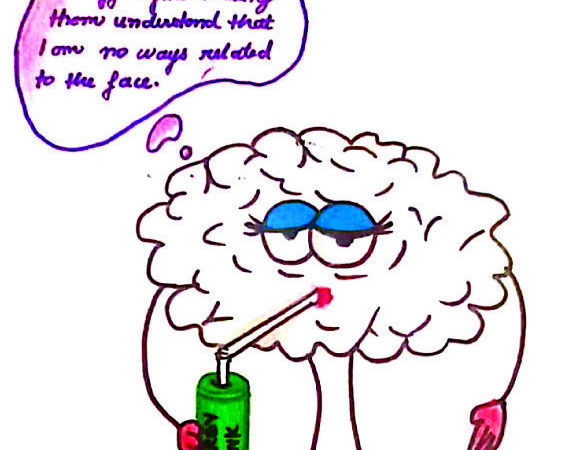
Jigyasa Raina, Born & brought in Delhi. She is running an e-commerce clothing brand, J.K. BELLA. Holds degree in Fashion design. Her interests besides designing are in sketching, content creation, music and reading motivational & inspirational books. She speaks her mind openly on issues which need attention of the society as a whole. She is on her journey of self discovery and has enormous zest for life. It was year 2019 when I was becoming aware of my surroundings, my existence & identity. I was in the middle of my soul awakening journey. That was the time when questioning everything I have ever learnt became obvious. Amongst all, there was one phrase that caught my attention & made me think about it over & over again. It was, “Beauty with brains”. It was that time when I kept asking myself, “Why this phrase is even considered as a compliment?” It bothered me that people find it unusual to have intelligence as well as beauty. A large part of our society thinks that way. I find it absolutely illogical & ridiculous. While writing this article, I looked into other writers’ views; many articles were in the favor of phrase but very few wrote against it. But now, awareness is coming to light. “Why people try to connect the two: beauty & brains?Aren’t both the components independent from each other?”The sad part is, not just men but women themselves believe that this combination is rare. If women have both, they consider themselves as unique. A woman gets manipulated by these so called compliments, whereas in reality this is not an appreciation but clearly an insult. Having a potential & capable brain for a human being should be considered as natural. Intelligence has nothing to do with your face whether attractive or not. Don’t let people make you believe that if you are beautiful, you don’t have to use your potential and vice-a-versa. This is 21st century with new perceptions & thinking. We as women can’t let ridiculous narratives define us. Today we have so many examples of women (regardless of their level of beauty) running huge empires & are successful in their respective fields. Let’s think this way: A woman is more than just a beautiful face. She is strong, nurturing, fierce, opinionated, loving, caring, etc. Women should not let these narratives limit their desires/dreams. Let’s be focused on working on our inner self rather than just outer self. Your personality, character, pure heart, clever brain & kind nature makes you a beautiful person not your face. Last but not the least I would like to leave this article on a powerful & positive note. So, REPEAT AFTER ME – LET THE PEOPLE APPRECIATE YOU FOR YOUR HARD WORK.LET THE PEOPLE FALL FOR YOUR CAPABILITIES & POTENTIAL.LET THE WORLD RECOGNISE YOU AS UNSTOPPABLELET THE WORLD LOVE YOU FOR KEEPING YOUR VALUES, STANDARDS & INNOCENCE INTACT.So next time someone tells you, that you are beauty with brains, let them know, “YOU ARE NOT THE PRODUCT OF THEIR PERCEPTION FOR YOU,YOU ARE THE PRODUCT OF YOUR HARD WORK & CONVICTION.”

No Comments Read More
Good Read

Kashmiri Shaiva Philosophy

Article Credit : https://iep.utm.edu/ What is commonly called “Kashmiri Shaivism” is actually a group of several monistic and tantric religious traditions that flourished in Kashmir from the latter centuries of the first millennium C.E. through the early centuries of the second. These traditions have survived only in an attenuated form among the Brahmans of Kashmir, but there have recently been efforts to revive them in India and globally. These traditions must be distinguished from a dualistic Shaiva Siddhānta tradition that also flourished in medieval Kashmir. The most salient philosophy of monistic Kashmiri Shaivism is the Pratyabhijnā, or “Recognition,” system propounded in the writings of Utpaladeva (c. 925-975 C.E.) and Abhinavagupta (c. 975-1025 C.E.). Abhinavagupta’s disciple Kshemarāja (c. 1000-1050) and other successors interpreted that philosophy as defining retrospectively the significance of earlier monistic Shaiva theology and philosophy. This article will focus on the historical development and basic teachings of the Pratyabhijnā philosophy. 1. Historical Development of Monistic Shaiva Philosophy in Kashmir The great cultural dynamism of medieval Kashmir included a number of cults that scholars now classify as “tantric,” including the interweaving Shaiva (Siva worshiping) and Shākta (Goddess worshiping) lineages the Vaishnava Pancarātra (an esoteric tradition centered around the worship of Visnu) and the Buddhist Vajrāyana tradition. a. Tantra and Kashmiri Shaivism While tantrism is a complex and controversial subject, one of its most definitive characteristics for contemporary classifications—if not its most definitive one—is the pursuit of power. Tantric traditions are thus those that aim at increasing the power of the practitioner. The theological designation for the essence of such power is Shakti (the female counterpart to the male divine principle, whose essence is power). The manifestations of Shakti that the practitioner of tantra aspire after vary greatly, from relatively limited magical proficiencies (siddhis or vibhūtis), through royal power, to the deindividualized and liberated saint’s omnipotence to the performance of God’s cosmic acts. In his seminal essay, “Purity and Power among the Brahmans of Kashmir,” the Oxford historian Alexis Sanderson elucidates that the tantric pursuit of such power transgresses orthodox, mainstream Hindu norms that delimit human agency for the sake of symbolic and ritual purity (shuddhi) (Sanderson 1985). Violating prescriptions regarding caste, sexuality, diet and death, many of the tantric rites were originally performed in cremation grounds. Whereas in Shākta tantrism, Shakti as a Goddess is herself the ultimate deity, in monistic Kashmiri Shaivism she is incorporated into the metaphysical essence of the God Shiva. Shiva is the Shaktiman (the “possessor of Shakti”) encompassing her within his androgynous nature as his integral power and consort. According to the predominant monistic Shaiva myth, Shiva out of a kind of play divides himself from Shakti and then in sexual union emanates and controls the universe through her. b. Basic Ritual Pattern of Kashmiri Shaivism The basic pattern of spiritual practice, which also reflects the appropriation of Goddess worship (Shaktism) by Shaivism is the approach to Shiva through Shakti. As the Shaiva scripture Vijnāna-Bhairava proclaims, Shakti is the door. The adept pursues the realization of identity with the omnipotent Shiva by assuming his mythic agency in emanating and controlling the universe through Shakti. Thus in the sexual ritual a man realizes himself as the possessor of Shakti within his partner. In more frequent internalized “theosophical” contemplations one realizes oneself as the possessor of Shakti in all her immanent modalities with the aid of circular diagrams of cosmogenesis (mandalas) and mantras. c. Domestication of Kashmiri Shaiva Thought Scholars identify some of the preconditions for the eventual development of monistic Shaiva philosophical discourse in the trend of medieval tantric movements to “domesticize” themselves by assimilating to upper-caste Hindu norms. Radical practices were toned down, concealed under the guise of propriety, or interpreted as metaphors of internal contemplations. An expression of this same process was the production by monistic Shaiva Brahmans of increasingly systematic manuals of doctrines and practices on the model of Sanskrit scholastic texts (shāstras). This creation of what may be described as a religious mission to the educated elites also led to the increasing consolidation of the various streams of monistic Shaivism. This development began in the ninth century with Vasugupta’s transmission of the manual Shiva Sūtra, ostensibly revealed to him by Shiva himself; and the further systematization of its teachings by either Vasugupta or his disciple Kallata in the Spanda Kārikā. These two works and their commentaries form the core texts of the “Spanda system” of monistic Shaivism, known for its interpretation of Shakti as spanda, “cosmic pulsation.” d. “Trika” Sub-tradition of Shaivism The tradition of monistic Shaivism called “Trika” (referring to its emphasis on various triads of modalities of Shakti and cosmic levels) produced the first work of full-fledged scholastic philosophy. This was the Shivadrishti, “Cognition of Shiva,” by Somānanda (c. 900-950 C.E.). (See the summary of themes of the Shivadrishti below.) Utpaladeva, a student of Somānanda, wrote a commentary on the Shivadrishti, the Shivadrishtivritti. He also wrote several other works interpreting and furthering the work of Somānanda with much greater sophistication. Those texts are the foundational works of the Pratyabhijnā philosophy of focus in this article. The most comprehensive of these texts are the Īshvarapratyabhijnākārikā, “Verses on the Recognition of the Lord,” and two commentaries on the Verses, the short Īshvarapratyabhijnākārikāvritti, and the more detailed Īshvarapratyabhijnāvivriti. (The latter text has been accessible to contemporary scholars only in fragments.) Utpaladeva also wrote a trilogy of more specialized philosophical studies, the Siddhitrayī, “Three Proofs”—Īshvarasiddhi, “Proof of the Lord;” Ajadapramātrisiddhi, “Proof of a Subject who is not Insentient;” and Sambandhasiddhi, “Proof of Relation.” Abhinavagupta, widely recognized as one of the greatest philosophers of South Asia, was a disciple of a disciple of Utpaladeva. Abhinava profoundly elaborated and augmented Utpaladeva’s arguments in long commentaries, one directly on the Verses, the Īshvarapratyabhijnāvimarshinī; and the other on Utpaladeva’s longer autocommentary, the Īshvarapratyabhijnāvivritivimarshinī. While Abhinavagupta’s Pratyabhijnā commentaries are of paramount philosophical importance, this thinker’s greatest significance in the history of tantrism is probably his effort, in his monumental Tantrāloka and numerous other works, to systematize and provide a critical philosophical structure to non-philosophical tantric theology. Abhinava utilized categories from the Pratyabhijnā philosophy to interpret and organize the diverse aspects of doctrine and practice and Shaiva symbolism from the “Trika” sub-tradition; and he synthesized under the rubric of this philosophically rationalized Trika

No Comments Read More
error: Content is protected !!

Sign In

Register

Reset Password

Please enter your username or email address, you will receive a link to create a new password via email.